Career Advice for Job Seekers
Beyond the resume: How to answer the new U.S. federal government’s ‘American Ideals’ essay questions

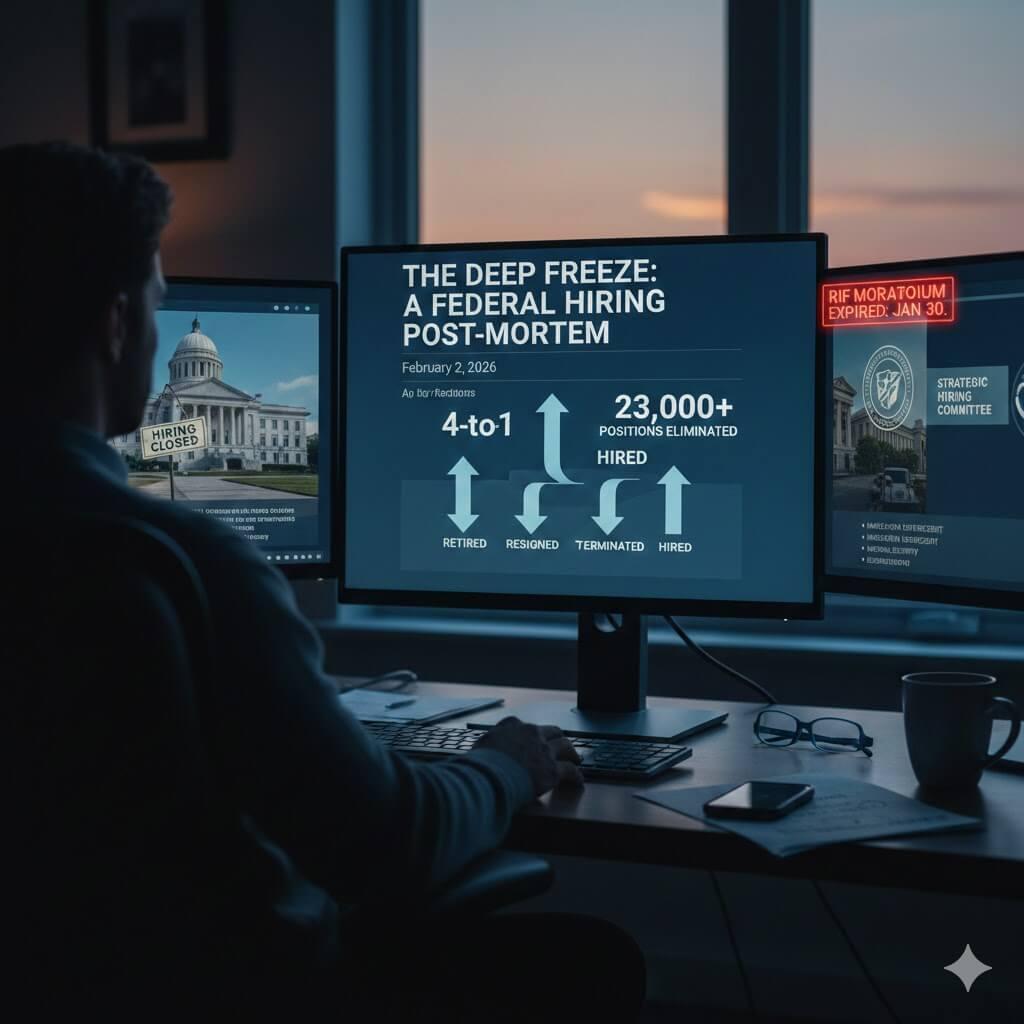
The shift in how the federal government evaluates talent has reached a tipping point this spring. As agencies prepare for the second half of the fiscal year, a common question is circulating through career centers and online forums: Is the U.S. federal government hiring freeze ending? While the answer is a resounding “yes,” the more important story for new graduates is how they are being hired. The “thaw” occurring this March isn’t just a return to old practices; it is the debut of the 2026 Merit Hiring Plan, a framework that officially prioritizes what you can do over where you went to school.
For decades, the entry-level federal job search was defined by the “educational gatekeeper.” If you didn’t have a specific degree or a certain GPA, your application often hit a digital wall before a human ever saw it. That era is closing. Under the new guidelines, agencies are shifting toward “skills-based hiring,” opening doors for graduates who may have unconventional backgrounds but possess the specific technical or operational competencies the government desperately needs right now.
The Death of the “Degree-Only” Filter
The 2026 Merit Hiring Plan is a response to a simple reality: the federal government needs to compete with the private sector for top-tier talent in fields like data science, cybersecurity, and project management. To do that, it had to stop disqualifying capable candidates simply because their degree didn’t perfectly match a legacy job code.
In this new environment, your diploma is a piece of the puzzle, not the whole picture. Hiring managers are now instructed to look for “demonstrable competencies.” This means that the internship where you managed a database or the capstone project where you led a team through a complex simulation now carries as much weight—sometimes more—than the name of your alma mater.
Navigating the “Competency Assessment”
Because the government is moving away from degree-based screening, they are moving toward more rigorous assessments. If you apply for a GS-5 or GS-7 role today, you are less likely to be asked for a transcript and more likely to be asked to complete a skills assessment.
These assessments are designed to measure “soft” and “hard” skills simultaneously. Can you communicate technical information to a non-technical audience? Can you identify a flaw in a logic chain? For a new graduate, this is an equalizer. It allows you to prove your worth in real-time rather than relying on a professor’s grade from two years ago.
How to Build a “Skills-First” Federal Resume
To succeed in this “post-freeze” hiring push, your resume needs to look different than the ones your older siblings used. The goal is to make it impossible for a hiring manager to miss your practical abilities.
- Lead with Skills, Not Just History: Instead of a traditional chronological list, consider a “Core Competencies” section at the top of your resume. Use the exact language found in the job announcement. If the posting asks for “Strategic Planning,” ensure that word appears prominently, backed by a specific example of a project you completed.
- Focus on “Mission-Critical” Tools: Federal agencies are currently obsessed with efficiency. If you are proficient in specific software, languages, or methodologies (like Agile, Python, or advanced data visualization), highlight these as primary assets. In 2026, these technical markers are often the “keys” that unlock a direct-hire interview.
- Quantify Your Impact: Even as a student or recent grad, you have data. Did you increase social media engagement for a campus club by 20%? Did you reduce the time it took to process intake forms at your part-time job? These numbers are the “proof of skill” that the new Merit Hiring Plan is designed to reward.
Why New Graduates are the Priority
Agencies are facing a “silver tsunami” of retirements that accelerated during the recent hiring pause. There is a massive institutional knowledge gap that needs to be filled, and the government is looking to the Class of 2025 and 2026 to fill it.
The current hiring push is specifically targeting “early-career” talent because the government needs “digital natives” who can navigate the newer, leaner infrastructure being built. They aren’t just looking for someone to fill a seat; they are looking for people who can help redefine how their department functions in a post-realignment world.
The “Mission-Critical” Advantage
If you are a new graduate searching for a role, don’t just look for generic “Analyst” titles. Look for roles tagged as “Mission-Critical.” These are the positions that have been fast-tracked for hiring as the freeze ends. They often come with better job security and more rapid promotion tracks (career ladders) because the agency has already justified their necessity to the Office of Personnel Management.
The competition is still stiff, but the rules are finally in your favor. The government has realized that a degree is a credential, but a skill is an asset. By focusing your application on what you can deliver on day one, you position yourself as the exact type of candidate the “new” federal workforce is built for.
The window is open, the freeze is over, and the “skills-first” era is here. It’s time to show the government what you can actually do.
Would you like me to move on to the third article, “Which Federal Agencies Are Hiring in March 2026? A Guide to the ‘Thaw’”?The shift in how the federal government evaluates talent has reached a tipping point this spring. As agencies prepare for the second half of the fiscal year, a common question is circulating through career centers and online forums: Is the U.S. federal government hiring freeze ending? While the answer is a resounding “yes,” the more important story for new graduates is how they are being hired. The “thaw” occurring this March isn’t just a return to old practices; it is the debut of the 2026 Merit Hiring Plan, a framework that officially prioritizes what you can do over where you went to school.
For decades, the entry-level federal job search was defined by the “educational gatekeeper.” If you didn’t have a specific degree or a certain GPA, your application often hit a digital wall before a human ever saw it. That era is closing. Under the new guidelines, agencies are shifting toward “skills-based hiring,” opening doors for graduates who may have unconventional backgrounds but possess the specific technical or operational competencies the government desperately needs right now.
The Death of the “Degree-Only” Filter
The 2026 Merit Hiring Plan is a response to a simple reality: the federal government needs to compete with the private sector for top-tier talent in fields like data science, cybersecurity, and project management. To do that, it had to stop disqualifying capable candidates simply because their degree didn’t perfectly match a legacy job code.
In this new environment, your diploma is a piece of the puzzle, not the whole picture. Hiring managers are now instructed to look for “demonstrable competencies.” This means that the internship where you managed a database or the capstone project where you led a team through a complex simulation now carries as much weight—sometimes more—than the name of your alma mater.
Navigating the “Competency Assessment”
Because the government is moving away from degree-based screening, they are moving toward more rigorous assessments. If you apply for a GS-5 or GS-7 role today, you are less likely to be asked for a transcript and more likely to be asked to complete a skills assessment.
These assessments are designed to measure “soft” and “hard” skills simultaneously. Can you communicate technical information to a non-technical audience? Can you identify a flaw in a logic chain? For a new graduate, this is an equalizer. It allows you to prove your worth in real-time rather than relying on a professor’s grade from two years ago.
How to Build a “Skills-First” Federal Resume
To succeed in this “post-freeze” hiring push, your resume needs to look different than the ones your older siblings used. The goal is to make it impossible for a hiring manager to miss your practical abilities.
- Lead with Skills, Not Just History: Instead of a traditional chronological list, consider a “Core Competencies” section at the top of your resume. Use the exact language found in the job announcement. If the posting asks for “Strategic Planning,” ensure that word appears prominently, backed by a specific example of a project you completed.
- Focus on “Mission-Critical” Tools: Federal agencies are currently obsessed with efficiency. If you are proficient in specific software, languages, or methodologies (like Agile, Python, or advanced data visualization), highlight these as primary assets. In 2026, these technical markers are often the “keys” that unlock a direct-hire interview.
- Quantify Your Impact: Even as a student or recent grad, you have data. Did you increase social media engagement for a campus club by 20%? Did you reduce the time it took to process intake forms at your part-time job? These numbers are the “proof of skill” that the new Merit Hiring Plan is designed to reward.
Why New Graduates are the Priority
Agencies are facing a “silver tsunami” of retirements that accelerated during the recent hiring pause. There is a massive institutional knowledge gap that needs to be filled, and the government is looking to the Class of 2025 and 2026 to fill it.
The current hiring push is specifically targeting “early-career” talent because the government needs “digital natives” who can navigate the newer, leaner infrastructure being built. They aren’t just looking for someone to fill a seat; they are looking for people who can help redefine how their department functions in a post-realignment world.
The “Mission-Critical” Advantage
If you are a new graduate searching for a role, don’t just look for generic “Analyst” titles. Look for roles tagged as “Mission-Critical.” These are the positions that have been fast-tracked for hiring as the freeze ends. They often come with better job security and more rapid promotion tracks (career ladders) because the agency has already justified their necessity to the Office of Personnel Management.
The competition is still stiff, but the rules are finally in your favor. The government has realized that a degree is a credential, but a skill is an asset. By focusing your application on what you can deliver on day one, you position yourself as the exact type of candidate the “new” federal workforce is built for.
The window is open, the freeze is over, and the “skills-first” era is here. It’s time to show the government what you can actually do.
New Job Postings
Advanced Search
