Career Advice for Job Seekers
11 things physics majors should do in December to help their 2026 job search


December is not the off-season for physics majors. It is the pre-season. While most students are powering down for the holidays, you have a strategic window to gain a massive competitive advantage for 2026. At College Recruiter, we see that the most successful candidates use this time to bridge the gap between complex theory and employer ROI. By acting now, you move from being just another student with a degree to a professional who understands how to solve real problems.
The reality of the market is that employers do not hire physics degrees. They hire solutions. You need to translate your technical knowledge into measurable results that a hiring manager can understand. This guide outlines eleven direct ways to build your professional profile and expand your network before the January rush. Taking these steps today ensures you are already vetted and top-of-mind when budgets reopen in the new year.
- Ask CapEx Owners About Q1 Problems
- Shadow Local Professionals And Share A Video
- Create Measurable Case Studies For Employers
- Build Open-Source Blockchain Or Cybersecurity Work
- Comment With Technical Observations Daily
- Refine One Example With Clear Logic
- Network Intentionally With Informational Interviews
- Post Physics Insights On LinkedIn
- Translate Theory To Real-World Results
- Review Progress And Practice Mock Interviews
- Choose Direction And Prove Practical Skills
Ask CapEx Owners About Q1 Problems
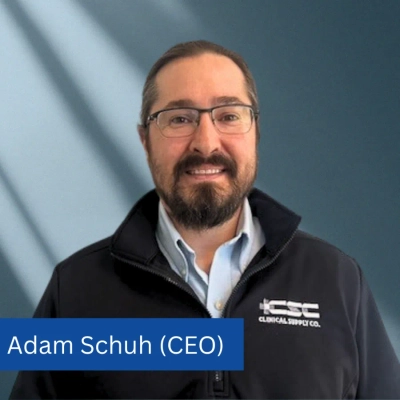
I ran a national distribution company through tariff wars, supply chain collapses, and a pandemic that should’ve killed us. The one thing that saved Clinical Supply Company wasn’t my MBA or industry connections–it was understanding *timing* in procurement and planning cycles.
Here’s what physics majors miss: December is when companies finalize their Q1 capital expenditure budgets and equipment purchases. When we rebuilt our FDA compliance infrastructure in 2019, I made those decisions in late November based on projected 2020 needs. The vendor who reached out in early December got the contract because they were there when I had budget authority but before I’d committed the funds. January was too late–I’d already signed.
If you’re targeting manufacturing, pharma, or any company that uses lab equipment or data analysis tools, find out who controls their CapEx budget *right now* and ask what problems they’re trying to solve in Q1. When we launched EZDoff gloves, the quality control protocols came from a physics PhD who asked me in December 2017 what our biggest contamination risks were. That conversation turned into a consulting contract because he understood our problem before we posted any job listing.
Don’t ask for jobs–ask what’s breaking in their operation that needs fixing by March. That’s the conversation that gets you hired, because you’re solving next quarter’s problem while everyone else is still sending resumes into HR black holes.
Shadow Local Professionals And Share A Video
I run an electrical contracting company in South Florida, and I’ve hired techs with physics backgrounds who crushed it–but also passed on plenty who couldn’t translate their skills into actual problems I needed solved. Here’s what the winners did differently in December.
They called local businesses in their target industry and asked to shadow someone for a day during the slow holiday week. Not an interview–literally just “Can I watch what you do for 4 hours?” When one physics grad did this at my shop in December 2019, he saw me arguing with a city inspector over load calculations and immediately understood what mattered in my world. Two weeks later when a position opened, he was the only applicant who mentioned permitting and compliance in his cover letter instead of just equations.
The other move: they took one complex project from school and recorded a 90-second phone video explaining it like they’re talking to their mom. I mean, actually record it on your phone in December. When I’m reviewing applications in January, I can’t decode thesis-level physics, but I hired a candidate who sent a Linklater-style video walking through how he optimized refrigeration efficiency using thermodynamics. It took him 78 seconds and I understood exactly what value he’d bring to my Smartcool energy consulting work.
December’s dead time for most companies, but it’s when hiring managers like me are planning Q1 needs. A five-minute shadow request or a quick video makes you memorable when budget approvals hit in January–way more than another polished resume in the pile.

Create Measurable Case Studies For Employers
I run one of the largest product comparison platforms online, and the strongest move physics majors can make in December is building a measurable problem-solving portfolio that mirrors how modern tech companies evaluate analytical talent. The fastest way to do this is by taking two or three physics-based projects and converting them into clean, recruiter-ready case studies. I build my own evaluations the same way. I start by mapping industry demand signals using DataForSEO, then push those insights into ChatGPT to refine the narrative, highlight impact, and tighten the technical explanations. After that, I structure everything in AWS so each project becomes a standalone, linkable asset. Finally, I use Zapier to automate updates so the portfolio stays fresh as new work is added.
This workflow turns raw academic work into a professional story that hiring managers understand immediately. Companies care less about the specific subfield of physics and more about whether you can model complex systems, simplify chaotic data, and communicate findings in a way that guides decisions. A December push to document your work with this technology stack puts you in front of January hiring cycles with proof you can solve real problems at scale.

Build Open-Source Blockchain Or Cybersecurity Work
For any physics major looking at tech jobs, start building blockchain or cybersecurity projects this December. When I built a digital wallet backend in school, those coding sessions got me attention from recruiters later. Jump into open-source communities. Actually building things that solve real problems gets noticed way more than your GPA ever will. I learned this the hard way.

Comment With Technical Observations Daily
I’ve spent years tracking what makes people take action in multifamily marketing, and the pattern that changed everything for me was understanding *when* people actually engage with content versus when they just scroll past it. Physics majors have a massive advantage here that most don’t leverage: you understand systems and can spot patterns in noise.
In November, I implemented UTM tracking across our portfolio and found our highest-quality leads came from prospects who engaged with our content 3-4 weeks *before* they ever filled out a contact form. They were researching in December and January, then converting in February and March. The physics majors we hired to help with our data analysis spotted this lag pattern immediately because they understood time-series data–something our marketing team completely missed.
Here’s what you should do this December: Pick 5 companies you want to work for and spend 20 minutes daily engaging with their actual content on LinkedIn or wherever they post. Not generic comments–find a specific data point in their posts and add a technical observation that shows you see patterns others don’t. When I reviewed applicants for our analytics roles, the person who’d been thoughtfully commenting on our occupancy trend posts for six weeks stood out immediately because they’d already demonstrated they understood our business model.
The key is that hiring managers are watching their engagement metrics right now for Q1 planning. When your name shows up multiple times in their notifications with intelligent technical observations, you’re already in the interview before you ever apply. Our best hires came from people who made themselves familiar before the job posting even existed.

Refine One Example With Clear Logic
Physics majors should use December to polish one project that shows clear reasoning and steady problem solving. At Advanced Professional Accounting Services, I hired someone who rebuilt a small simulation and wrote a short note on why each step mattered. Their clarity stood out right away. I also suggest updating your portfolio with clean visuals and tidy code. Share a quick update with mentors. These moves build momentum and help you stand out early in 2026.

Network Intentionally With Informational Interviews
One of the most essential things physics majors can do in December to prepare for a great job in early 2026 is to start networking intentionally. That means reaching out to alums, professors, and professionals in industries that interest you. Use the slower holiday season to request informational interviews and build genuine connections.
I’ve seen firsthand, even in the self-storage business, how hiring decisions often come down to relationships and timing. A strong resume helps, but a warm introduction can get your foot in the door faster than cold applications alone. Start planting those seeds now so you’re top of mind when companies begin hiring in the new year.

Post Physics Insights On LinkedIn
If you’re a physics student, try posting on LinkedIn. When I started sharing my projects, recruiters started reaching out. Connecting your physics knowledge to real-world problems works well. Simple write-ups or short videos are enough. Doing this now can lead to job offers you weren’t even looking for by early 2026.

Translate Theory To Real-World Results
The most important thing a physics major should do in December to land a great job in early 2026 is to reframe their degree for the real world. When you’re hiring for a service business like Honeycomb Air, or any company that isn’t a research lab, the physics curriculum is too theoretical. I don’t care that you know about quantum mechanics; I care that you can prove your skill in systematic problem-solving, data analysis, and diagnosis. That’s the language we speak in business.
Your job in December is to translate every complex experiment, every coding project, and every research paper into a clear, one-page document or portfolio entry that proves you can tackle real-world challenges. Stop listing coursework. Instead, detail a project where you used data to diagnose a flaw, optimized an inefficient system, or wrote a clear report on a technical issue. You have to actively connect the dots between high-level theory and practical application for the interviewer.
The key action they should prioritize is building a non-academic network. They need to use December to talk to managers and business owners in San Antonio—people who actually hire engineers and analysts—not just professors. Ask them what skills are truly missing in the workforce. This practical networking will do two things: it will uncover hidden job opportunities and, more importantly, it will teach the physics major the exact language they need to use in their resume and interviews to sell their powerful, analytical mind.

Review Progress And Practice Mock Interviews
I am a physics major undergrad student at Vivekanand College, Kolhapur, Maharashtra, India. I just got done with my fifth semester, and I have now stepped into the last semester. I have been participating in both extracurricular activities and career-focused development since starting my degree program. Be it attending seminars, events, and lectures or doing online internships. I have done it all. As the year ends now, it’s my time to look back and see the progress I have made and plan what I am going to do in the upcoming year. The most important thing a physics major should do this December is revisit the lessons you have learned. Look up the questions you have solved, look up the field projects you have submitted, and I would also recommend talking to your graduated seniors or your professor or your mentor who has been in the recruitment drives about what the companies look for in the candidate and what kind of questions they ask in the interviews, and if possible, start giving mock interviews to your professor and let him assess your strengths and weaknesses, and based on this, you should work on yourself. That’s it!

Choose Direction And Prove Practical Skills
For physics majors, December should be about choosing direction and building proof. Physics opens many doors, but that can slow job searches if you don’t focus. December is the best time to commit to one or two job paths and prepare for them properly before competition increases.
I’ve seen students succeed faster when they stop waiting for perfect roles and start showing how their skills work in practice through projects, code, or applied examples. December gives you space to do this before deadlines and exams take over.
Smart December actions:
Choose a target role (data, engineering, software, research)
Create or polish one applied project
Update your resume to reflect that direction
Start applying early, not after graduation
Employers hire confidence, and December is when it’s built.

Related Articles
New Job Postings
Advanced Search
