Career Advice for Job Seekers
14 things chemistry majors should do in December to help their 2026 job search


December is not the off-season for chemistry majors. It is the pre-season. While most students are taking a total break, you have a strategic window to outpace the competition for 2026 roles. At College Recruiter, we see that the most successful candidates use this time to bridge the gap between classroom theory and employer ROI. By taking specific steps now, you move from being just another student with a degree to a professional who understands how to deliver value in a lab.
The chemistry job market is demanding. Employers do not hire degrees; they hire solutions to specific problems. You need to translate your lab skills into measurable business results. This guide gives you 14 direct ways to build your professional profile and capture employer attention before the January rush. Taking these aligned steps today ensures you are already vetted and top-of-mind when hiring managers return to their desks in the new year.
- Secure Short Term Real Practical Experience
- Investigate New Frontier Topics and Roles
- Shadow a Local Chemistry Workplace
- Send Targeted Solutions to Decision Makers
- Translate Lab Expertise into Business Value
- Gain Depth in a Scarce Bench Capability
- Clean Up Your Professional Online Presence
- Prepare Clear Plain English Project Examples
- Build a Data Driven Results Portfolio
- Pursue Focused Informational Career Conversations
- Study GMP and GLP Laboratory Standards
- Master One Language for Automated Analysis
- Leverage Professors to Access Alumni
- Conduct a Hands-On Material Compatibility Audit
Secure Short Term Real Practical Experience
One of the most important things chemistry majors should do in December is secure credible, hands-on experience before the job market heats up in January.
Earlier in my career, I reviewed a wave of science resumes every spring. The candidates who moved fastest weren’t always the ones with the highest GPAs. They were the ones who could point to real lab work, quality testing, or analytical projects they’d already completed.
From an employer’s standpoint, December is a hidden advantage. Labs slow down, supervisors have more time, and short-term roles suddenly become easier to land. That’s when proactive students stand out.
Chemistry employers want proof you can follow protocols, document results, and work safely, not just theory from class.
What chemistry majors should do in December:
Reach out to labs, manufacturing sites, or QA teams for short-term roles
Apply for winter research assistantships or contract lab work
Update your resume with instruments, methods, and compliance experience
Prepare one clear example of solving a real lab problem
Hands-on experience now often leads to early 2026 offers.

Investigate New Frontier Topics and Roles
Instead of passively applying to jobs, spend December exploring where chemistry is heading in 2026. Dive into preprint servers like ChemRxiv, specialized journals, and early-stage patent filings.
Look for techniques, materials, or processes that are gaining traction but are still under the radar, such as new battery electrolytes, AI-driven synthesis methods, or green catalysis innovations. Take notes on how your skills, such as synthesis, analysis, or computational modeling, could contribute to these emerging areas.
Reach out to researchers or hiring managers with a concise note showing how you can help advance these projects. This positions you as a candidate who is not only qualified but strategically prepared for the industry’s next moves, giving you an advantage before the January hiring rush.

Shadow a Local Chemistry Workplace
I’ve spent 30+ years in coatings and chemistry matters daily in my work–whether it’s understanding solvent balances in reducers, catalyst ratios in two-pack primers, or how zinc chromate provides corrosion protection. Chemistry knowledge is valuable, but here’s what actually gets you hired: demonstrate you can solve real problems with it.
In December, find one local business that uses chemistry in their operations (coatings shop, manufacturer, lab, whatever) and offer to spend a day shadowing them for free. Not an internship application–just say you want to understand how chemistry works in their specific industry. When I took over Eastern Auto Paints, the suppliers who got my business weren’t the ones with the fanciest credentials; they were the ones who understood my actual coating challenges because they’d been on shop floors.
That one day gives you something concrete to talk about in January interviews. Instead of “I have a chemistry degree,” you can say “I spent a day at XYZ Company and saw how they handle solvent recycling compliance–here’s what I learned about their process.” Employers remember specifics like that because it shows you’re curious about application, not just theory.
When we needed someone to help with our custom spray can project that went overseas, technical knowledge mattered less than understanding how formulas behave in real conditions. December shadowing turns you from another graduate into someone who gets how chemistry actually works outside a lab.

Send Targeted Solutions to Decision Makers
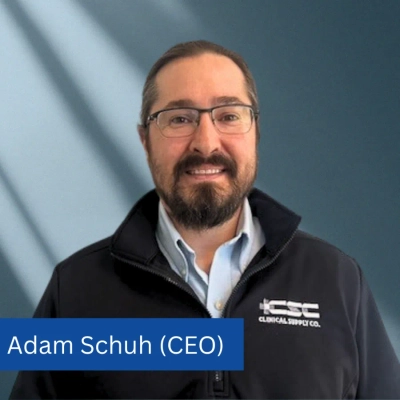
I’ve spent years navigating supply chain disruptions and material shortages in medical-grade manufacturing, and here’s what chemistry majors miss: **December is when you lock in your competitive advantage by solving a real problem for free.**
Pick three companies you want to work for and study their December regulatory filings, EPA compliance reports, or material sourcing challenges. Then write a 300-word analysis showing how you’d solve one specific problem they’re facing–polymer stability issues, contamination reduction, whatever matches your coursework. Email it directly to the lab director or R&D manager. When we developed EZDoff gloves and reduced contamination risk by 73%, it started because someone on our team identified a problem nobody else was addressing and presented a solution before we even knew we needed it.
The manufacturing world shuts down the last two weeks of December, which means decision-makers actually read emails. I’ve hired people who sent unsolicited process improvements during the holidays because their inbox wasn’t buried under 50 vendor pitches. One candidate sent me a breakdown of how tariff-resilient pricing models could apply to a different product line–I didn’t have an open position, but I created one.
Most chemistry grads wait for job postings. The ones who get hired fast spend December becoming the answer to a question the company hasn’t asked yet.
Translate Lab Expertise into Business Value
My one piece of advice for chemistry majors looking to lock down a job early in 2026 is to spend December focusing on translating technical skills into business value. When you’re a science major, it’s easy to focus on lab techniques and complex theory. But most companies, including one like Honeycomb Air, are looking for employees who can explain how their expertise solves a tangible problem, whether that’s in R&D or operational efficiency.
For example, don’t just list “Proficient in Spectroscopy.” Instead, explain how your understanding of chemical processes can improve material science in product development, or, for us, how it could help identify the best, safest new refrigerants for HVAC systems here in San Antonio. You have to clearly connect your scientific knowledge to the company’s bottom line—to saving time, money, or improving the customer’s quality of life.
The most important action in December is to get your resume and LinkedIn profile reviewed by people outside of academia. Find a mentor who runs a manufacturing, engineering, or service business. They will force you to ditch the jargon and communicate your value in terms of results and operational improvements. Show a hiring manager that you understand their commercial pain points, and your chemistry degree suddenly looks like an investment, not just a certificate.

Gain Depth in a Scarce Bench Capability
Late December is a rare pocket of quiet time in academia. Chemistry majors can use it to build depth in a highly specific skill that hiring managers struggle to find. Think targeted instrument proficiency, niche wet lab techniques, or analysis workflows tied to emerging fields like battery chemistry or green synthesis.
A short, focused sprint on a single technical talent creates standout portfolio material fast. Students can document it with a mini project, a data set, a short protocol video, or a micro-report. Recruiters notice precision far more than broad familiarity, so this concentrated December push gives them a distinct edge when hiring kicks off in early 2026.

Clean Up Your Professional Online Presence
I spent 17 years in healthcare before co-founding my practice, and I’ve hired multiple people along the way. Here’s what nobody tells chemistry majors: December is when you need to *fix your online presence*, not polish your resume for the hundredth time.
When I was hiring staff for CMH-RI in 2021, I rejected three qualified candidates before even calling them because their social media showed partying pics and unprofessional content on the first page of Google results. One person I *did* hire had a clean LinkedIn with a simple post about a chemistry project they were proud of–that told me they understood professional image matters.
Take 2 hours this December and Google yourself. If anything sketchy shows up, delete it or bury it by creating professional content. Post one thing on LinkedIn about a chemistry technique you learned or a lab result you’re proud of. When hiring managers search your name in January (and they will), you want them finding someone who looks ready to work, not someone they need to worry about.
I’ve seen people lose job offers over a single Facebook photo. Don’t let December slip by without controlling what employers see when they type your name.

Prepare Clear Plain English Project Examples
They should use December to pull together two or three clear examples of lab or research work they can explain in plain English, because employers want to see how you think through problems, not just the techniques you’ve used. Focus on moments where you improved a process, solved a recurring issue, or spotted something in the data that changed your approach. In our plumbing shop, we value the same mindset when hiring tech roles for field tools or water quality projects, since the people who can break down their reasoning usually adapt fastest. A helpful step is to create a short project summary for each example with the problem, your method, and what you learned. Share it with a friend outside your major and ask whether it makes sense without extra explanation. When you start the new year with clean, confident stories, employers can quickly understand how you work and where you’d fit on their team.

Build a Data Driven Results Portfolio
I run one of the largest product comparison platforms online, and December is when I see chemistry majors get the biggest advantage by building a data-driven portfolio that proves real analytical skill. The easiest starting point is aggregating their lab, research, or internship work into a structured results archive. I use a similar workflow in my evaluations. First, I pull datasets into DataForSEO to identify industry demand signals. Then I push those themes into ChatGPT to convert raw findings into clear, recruiter-friendly summaries. Next, I run everything through AWS for storage and indexing so each project becomes a standalone asset that can be delivered instantly to hiring managers. Finally, I integrate everything in Zapier so a single update automatically refreshes the entire portfolio.
This technical stack lets you package your chemistry experience the same way we package thousands of product evaluations. Recruiters want candidates who can interpret messy data, optimize workflows, and document conclusions with clarity. A polished December portfolio becomes proof you can do the same inside a lab, a pharmaceutical company, or a materials science team. If you apply across January hiring waves with this foundation in place, you stand out immediately.

Pursue Focused Informational Career Conversations
In December, chemistry majors can target professionals in applied chemistry, pharmaceuticals, environmental science, cosmetics, or materials engineering for informational interviews.
Through these discussions, career tracks, hiring schedules, and, frequently, internships or lab placements that are not so much publicised are revealed. Since most professionals have fewer work-related responsibilities in December, they are more willing to offer advice before the demands of the new year set in.

Study GMP and GLP Laboratory Standards
While you are in university, the focus is all on discovery, but when you enter the corporate world, it is more often about compliance. Chemistry majors should use December to familiarize themselves with the “Alphabet Soup” of the industry. Example: GMP (Good Manufacturing Practice) and GLP (Good Laboratory Practice).
Chemistry majors don’t yet need a full certification, but reading up on these standards can show hiring managers that they understand how a professional lab operates. If an interviewer asks in January if they are comfortable with strict documentation, chemistry majors should be prepared to answer, “Yes, I spent my winter break studying GMP protocols.”

Master One Language for Automated Analysis
Develop a portfolio of automated data visualization and data-processes scripts by December. The ability to translate complex raw-data into meaningful pictures through automation, via the right programming language, has become critical to navigating the increasingly data-driven nature of R&D. Action: The focus should be on the mastery of an individual programming language (for example, Python or R) to enable the automated analysis of a common-type data set associated with chemistry such as Kinetic Reaction or MS data through the programming language to increase laboratory efficiency, reduce data-entry human error, and allow for a direct contribution of innovation velocity to the research team.

Leverage Professors to Access Alumni
Reach out to chemistry professors and ask them to connect you with alumni working in industry. December is ideal because professors have more available time after the autumn semester ends, and many businesses begin hiring in January.
This is how to do this:
1- Email 3 to 5 professors in your area of chemistry and explain your interest in pharmaceutical, materials, environment, analytical labs, etc.
2- Ask if they have any former students of theirs that they can connect you with who may be willing to speak with you for 20 minutes about their experience and career path.
3- When professors connect you to alumni, take the opportunity to send a personal email with a few questions about their job and which skills they may find necessary for that profession, and simply state that you would appreciate any guidance they would be willing to give. Most alumni take pleasure in lending a helping hand.
4- After every meeting, be sure to ask: “Please, do you know if your company is hiring, may I send you my resume, so you have it for any future job openings?”
This is effective because chemistry is a small field, meaning professors have plenty of contacts in their area – former students, co-researchers, industry partners. One email can easily lead to a job opportunity.
Employers appreciate these recommendations. It’s much more effective than cold emailing countless employers.

Conduct a Hands-On Material Compatibility Audit
Chemistry majors should immediately focus on quantifying their verifiable structural knowledge of material application before the hiring market heats up. The conflict is the trade-off: traditional preparation focuses on abstract lab theory, which creates a massive structural failure in their job application; they need to anchor their worth to verifiable, measurable industrial relevance.
The most important thing to do in December is the “Hands-on Material Compatibility Audit.” They must stop describing academic work and instead convert their theoretical knowledge into a specific, verifiable solution for an industrial problem. For instance, they should detail how their knowledge of polymer chemistry solves a failure point in heavy-duty coatings or adhesives. This forces them to trade abstract formulas for objective, measurable structural data. They must be able to prove, hands-on, how their chemical understanding prevents a costly material failure in a real-world asset.
This ensures that when they interview in 2026, they are not selling their potential; they are selling verifiable structural certainty and competence in practical application. They demonstrate they are a necessary asset whose skill set directly secures product integrity. The best way to secure a great new job is to be a person who is committed to a simple, hands-on solution that prioritizes quantifying and verifying their structural competence in material science before entering the market.

Related Articles
New Job Postings
Advanced Search
