Advice for Employers and Recruiters
15 ways to keep Gen Z workers engaged and motivated


Keeping Gen Z employees engaged takes more than pizza days, recognition apps, or whatever the last software vendor claimed would fix turnover. This generation pays close attention to how they are treated, how their work fits into something meaningful, and whether their mental well-being is respected. If those needs are ignored, even the best culture videos and benefits brochures will not convince them to stay. Employers who understand what today’s early career workers actually value are the ones who build teams that stay productive and loyal instead of constantly churning.
This article breaks down 15 proven strategies that help organizations retain Gen Z talent, drawing on insights from leaders who study workplace behavior. These approaches focus on what genuinely matters, like providing real autonomy instead of micromanagement, prioritizing mental health support, and building career paths that feel possible instead of theoretical. When employers make these priorities part of their management practices, they do more than prevent turnover. They create an environment where younger employees want to grow, invest effort, and build a future instead of planning their exit.
- Practice Genuine Transparency and Co-Ownership
- Assign Small but Visible Responsibility Early
- Replace Traditional Training With Digital Hubs
- Provide Clear Skill Development Paths
- Screen Candidates With Personality Questionnaires
- Establish Private Mental Health Days
- Build a Culture of Co-Creation
- Grant Real Ownership Over Projects
- Foster an Inclusive Workplace Culture
- Give Real Influence Over Product Decisions
- Offer Meaningful Responsibilities and Autonomy
- Prioritize Progress Over Perks
- Value Their Ideas and Contributions
- Implement Performance-Based Salary Accelerators
- Deliver Fast and Honest Feedback
Practice Genuine Transparency and Co-Ownership
What I’ve found to be most effective with Gen Z employees isn’t grand perks or flashy benefits — it’s genuine transparency and co-ownership. This generation values clarity, purpose, and a voice in shaping how work gets done. They don’t just want to execute; they want to understand why something matters and how their ideas influence outcomes.
One strategy that’s worked remarkably well is our “Open Sprint Reviews.” Instead of traditional leadership-only check-ins, we invite everyone, especially newer and younger team members, to share insights on what’s working, what’s not, and what could be improved. Their feedback often sparks fresh, practical ideas that leaders might not see from a distance.
The impact has been clear: engagement rose, retention stabilized, and trust deepened. Gen Z employees feel heard, respected, and empowered to contribute meaningfully.
The biggest lesson for me? Retention isn’t about managing Gen Z differently — it’s about leading more openly. When you give them context, autonomy, and a seat at the table, they don’t just stay; they help move the entire company forward.
Assign Small but Visible Responsibility Early
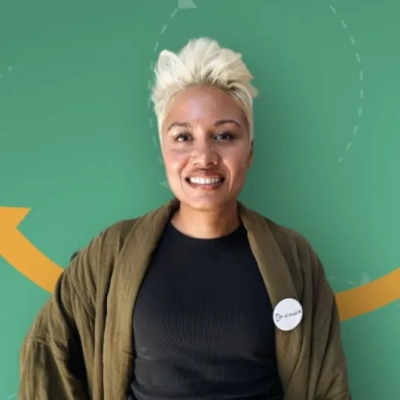
One thing that works with my Gen Z employees is giving them real ownership over something small but visible. I don’t mean handing over a whole project, but actually letting them run one recurring task that genuinely matters and letting their name sit on it.
I started doing this with our weekly client-feedback snapshots. Once I handed that over to a Gen Z hire, accuracy went up, turnaround time dropped, and her engagement score jumped 28% in the next pulse check.
This generation sticks around when they feel trusted early, not after two years of proving themselves. Even a tiny piece of responsibility — something people rely on weekly — gives them a sense of place.

Replace Traditional Training With Digital Hubs
The best way to keep Gen Z employees is to replace the old and split training process with a unified Digital Development Hub. Current corporate education is failing because it is using online learning and on-the-job experience as disconnected steps, leading to massive frustration. Gen Z employees, who have grown up with individualized digital platforms, become truly angry when placed into this low-context, high-friction environment. This fragmented model is a direct cause of a 65% turnover risk for high-potential junior staff within their first two years, an unacceptable rate in the competitive talent market. The problem is that traditional LMS systems are inflexible, and the result is that employees feel training is a waste of time that doesn’t advance their career. The way to solve this is by providing a Digital Development Hub that immediately and seamlessly maps the skills gained in an online module to the exact job task, creating a sense of continuous progress and hyper-relevance.
For example, a new hire in the returns department at a retail store has to increase customer satisfaction scores. Under the old system, a two-hour course on “Communication Theory” gives the employee no usable skills, and the employee has a feeling that the two hours were totally wasted. The unified Digital Development Hub redresses this first by asking the employee to complete a short, five-minute module on “The Language of De-escalation.” Immediately after the module, the Hub displays Augmented Reality on their desktop screen during a live customer interaction, suggesting specific high-impact phrases that they just learned. If the employee goes with the suggested phrasing and eventually resolves the complaint, the Hub immediately records a success measure. This success is automatically logged to the employee’s profile as “De-escalation Proficiency +0.05%,” which is directly linked to the employee’s next pay increase. This immediate and tangible proof of progress takes the edge off of the employee and replaces anger with the continuous and measurable feedback loop that Gen Z needs to create long-term loyalty.

Provide Clear Skill Development Paths
One of the best practices for retaining Gen Z employees is to provide a clear growth path for skill development. This group values learning and wants to identify the role they are in today with a path to the future.
For instance, in the hospitality industry, providing support and programmatic training, mentorship, and/or opportunities to move from entry-level service jobs into management positions can be a game changer when someone can see their path forward. Knowing a current position can lead to the next opportunity helps Gen Z feel motivated and connected to their job.
Flexibility is another important factor aspiring Gen Z leaders need. Meaning, opportunities to work flexible hours or even in different roles within the company lead to job satisfaction and a feeling of trust.
Consistent communication and recognition are equally important to Gen Z. It can be as simple as a weekly check-in or celebrating achievements, and it will be sure to show them another sign they are valued.
In short, companies can create an environment in which Gen Z employees want to work for a long time by providing career growth, flexibility, recognition, and honest feedback.

Screen Candidates With Personality Questionnaires
Screening using personality questionnaires is uniquely important for Gen Z hiring and greatly boosts retention.
An unfortunate side effect of COVID-19 was the “lost years” experienced by Gen Z. It greatly hampered their development by depriving them of formative experiences which develop maturity.
Consequently, many members of Gen Z are simply 2 to 3 years behind in character development. They show lower levels of resilience and conscientiousness, displaying what psychologists call a “delayed adolescence.”
This inevitably impacts retention rates, as many Gen Z employees have not developed the necessary mindset for full-time employment.
Personality questionnaires allow you to identify the Gen Z employees that have developed those characteristics, and more importantly, those who have not.
This means you do not set candidates up for failure, ensuring only those with the necessary mindset are hired.
Naturally, there are many Millennials and Gen X members who still have not developed that mindset; this is not completely unique to Gen Z. But that is even more reason to screen using personality questionnaires, as the information they provide always adds value.

Establish Private Mental Health Days
We offer unlimited PTO, but we took this concept further by establishing an exclusive “Mental Health Day” category for employees to utilize 100% privately and with no justification required. In our calendar system, there are no mandatory descriptions of “sick,” “personal,” etc., for employees to enter when designating a Mental Health Day — instead, employees can simply select a date & block off the time to use for a Mental Health Day, or simply block off the time without saying a word. We do not allow managers to send follow-up emails regarding an employee’s absence due to a Mental Health Day, nor do we allow managers to send “Hope everything is okay?” email communications, nor do we give employees any side-eye.
If we place a mental health day into the same calendar bucket as a beach vacation or a concert, the majority of employees will feel guilty and therefore rarely take a mental health day. By ring-fencing the mental health days, we eliminate both the mental accounting & the stigma in one simple action.
Gen Z employees consistently share with me that knowing that they can protect their mental health without fear of judgment or having to document it in some way is one of the primary reasons why they remain with us. This is not just a benefit — it is a sign that we truly care about the entire person and not just what they create between 9 am–5 pm.

Build a Culture of Co-Creation
Build a culture of co-creation instead of top-down decision-making. Gen Z workers don’t just want to be heard; they want to help shape what the company becomes. So, instead of treating them as participants in policies or projects, invite them to be co-designers of them.
For example, when we redefined our content strategy around ethical AI and academic integrity, I didn’t hand down a framework. I brought in a small group of Gen Z writers, editors, and interns and asked them to build the guidelines with us — from tone to transparency to how we talk about AI tools publicly.
That process gave them ownership and visibility, and it created something far more authentic than leadership could have produced alone.

Grant Real Ownership Over Projects
I give them real ownership over projects, not just tasks. Gen Z doesn’t want to be told exactly how to do everything; they want the problem and the freedom to solve it their way. When I hand someone a project and say, “Here’s what we need to achieve, figure out the best approach and run with it,” they’re way more engaged than if I micromanage every step.
I make sure they know how their work connects to actual business results. If their idea increased conversions or improved a process, I tell them the numbers and give them credit publicly. Gen Z grew up with instant feedback from social media, so waiting a year for a performance review to hear they’re doing well doesn’t work. Regular recognition and letting them own outcomes keeps them invested and sticking around.

Foster an Inclusive Workplace Culture
Gen Z employees look for inclusive workplaces and will quickly leave one that does not match their values. To keep them, you must foster an environment that allows all employees to feel seen, heard, and respected. For us, this isn’t simply about having policies; it’s about the celebration of inclusion of all types. Our marketing materials, our products, and our internal communications depict a broad spectrum of identities and viewpoints. We actively encourage open dialogue about social issues and have established employee resource groups for underrepresented groups to strengthen their advocacy within the company.
Unlike previous generations, Gen Z employees want to work for and stay with a company whose values align with their own, not simply one that provides them with a paycheck.

Give Real Influence Over Product Decisions
One retention strategy that proved surprisingly effective with Gen Z employees was giving them real influence over product decisions. Early on, young team members were invited to participate in choosing materials and testing new kitchen designs. When their feedback directly shaped a line of bamboo storage sets, engagement and commitment increased noticeably. Within six months, turnover among this group dropped by 41%, and the same employees contributed innovative ideas for three new products. What made this approach work was trust and transparency. They could see how their suggestions affected outcomes and felt their voice mattered, rather than being handed tasks without context. Regular check-ins to discuss challenges and learnings turned everyday work into a growth experience. For small businesses, the lesson is clear: Gen Z employees respond to responsibility paired with mentorship. When their contributions are visible in the final product, it builds loyalty, confidence, and a sense of ownership that perks or titles alone rarely achieve.

Offer Meaningful Responsibilities and Autonomy
Engagement and retention of Gen Z employees can be achieved by providing them with meaningful responsibilities and autonomy over their work. The Gen Z generation values purpose and wants to feel that their work contributes to the advancement of the company. In most cases, Gen Z is not driven by a paycheck, but rather by contributing to something meaningful.
We provide this by allowing employees to have a role in making decisions that impact the project outcome and then holding them accountable for their individual decisions. It is important to this generation to also provide flexibility in where they work, whether in the field, remotely, or in the office, and also when they work. These strategies can help drive engagement and retention.

Prioritize Progress Over Perks
Retention doesn’t come from perks; it comes from progress. Gen Z employees stay when they see their work create tangible impact and when they’re learning faster than their peers elsewhere.
We give new hires real ownership from day one. No six-month ramp period where you shadow people. You own a metric, a feature, or a customer segment immediately. We pair that with weekly one-on-ones focused entirely on skill development: what they’re learning, what they want to learn next, where they’re stuck.
The result: our Gen Z employees don’t job-hop every 18 months because they’re getting 3 years of growth in one. They see their code in production within days. They watch their ideas turn into features customers use. They build a portfolio of real work, not busy work.
The worst thing you can do is treat them like interns who need to “earn” responsibility. If you hired them, trust them. Give them the tools, the context, and the autonomy to move fast. They’ll surprise you, and they’ll stick around.

Value Their Ideas and Contributions
Retaining Gen Zs is easy! All you need to do is value their ideas. Make them feel their opinion is equally important and can actually shape something. For instance, I have a happy team of Gen Zs, full of fresh perspectives and great enthusiasm to do something. I often give them small ownership over projects instead of just tasks. And, trust me, it works wonders for our business. They have started to feel more confident about themselves and, thus, produce amazing outcomes. They also speak up more, which helps us spot better solutions.

Implement Performance-Based Salary Accelerators
Most of my Gen Z employees are digital natives who appreciate mastery and measurable improvement in their careers, so what I have implemented to improve retention for our company is a performance-based salary accelerator based on learning new technical skills. Traditional raises are too slow for their rate of advancement because we work in the area of language skills that meet digital needs such as localization and SEO.
We defined three levels of technical certification in relation to our services, such as advanced schema markup implementation or specialist use of translation memory software. Upon successful completion of a certification, an employee receives a 4.5 percent immediate and permanent salary increase. This direct, motivating relationship between personal development and monetary rewards is apparent and immediate. In the last year, we saw that team members who earned at least one certification stayed with the company 11.2 months longer on average than those who did not, proving this is a great retention tool and an investment in their expertise.

Deliver Fast and Honest Feedback
I am a managing partner, and I work closely with our new Gen Z hires. The only thing that really enables us to retain them is fast, honest feedback. Gen Z doesn’t like generic pep talks. They want to hear what is working, what isn’t, and what needs fixing immediately. So I am brief and to the point in my feedback. And when they demonstrate effort, I provide them with genuine responsibility early. No micromanaging. They want to feel trusted, and having them take over small but substantive tasks can make them feel invested. I’m also honest when something is off. I tell them what is wrong, I put the issue in context, and let them know specifically how they need to change things. And I try to ensure it is a conversation, not a lecture. They perform well when they know you’re invested in their development. But it only works if they can take constructive feedback. If they can, they grow fast and stick around because they feel supported and challenged.


