Career Advice for Job Seekers
25 Career Tips for Fine and Performing Arts Students

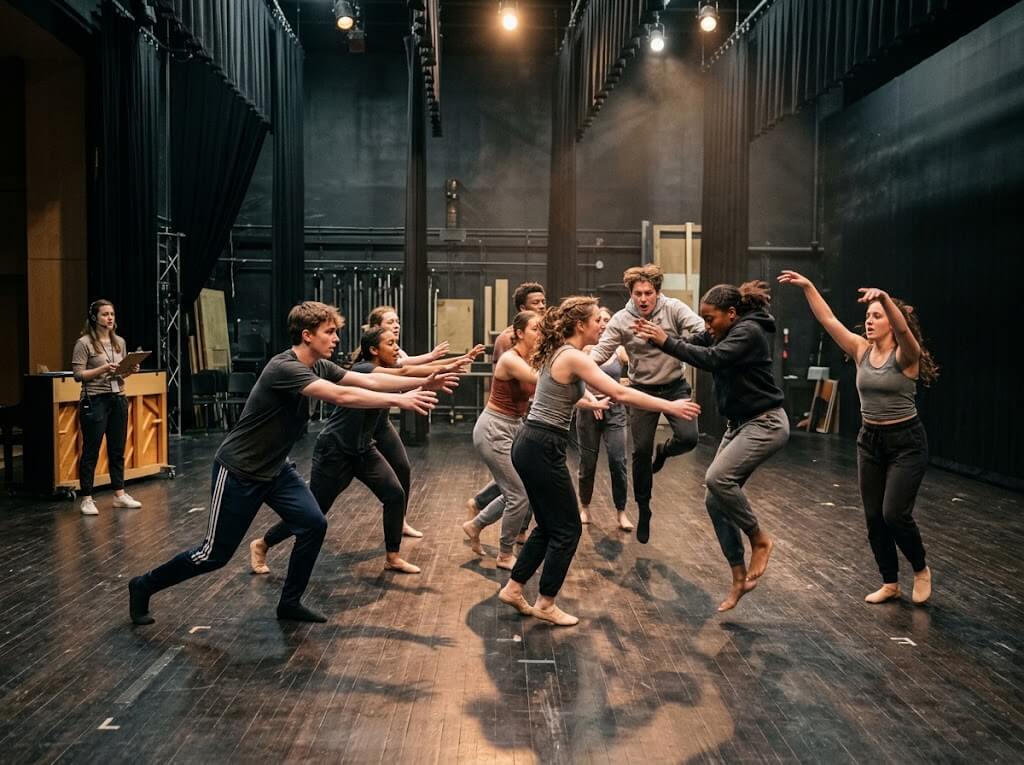
Making a living in the arts takes way more than just being talented at your craft. Today’s creative industries look for people who can deliver quality work on tight deadlines, talk confidently about their ideas, and understand the business side of their work.
To turn your artistic passion into a lasting career, you have to treat your skills like a business from day one. Focusing on building a solid portfolio, learning how to handle client feedback, and putting your work out there before you graduate will help you land great opportunities and build a sustainable career you control.
- Monetize a Focused Service
- Foster Guest Participation
- Pair Classical Media With Emerging Tools
- Demonstrate Revisions Under Deadlines
- Own Your Online Identity
- Establish Community Credibility
- Join Exhibit Installation Teams
- Leverage Poise Under Evaluation
- Adapt Designs to Client Needs
- Let Deliverables Outweigh Credentials
- Build an Audience Before Graduation
- Nurture Industry Relationships
- Complete Modest Work Consistently
- Explain Transferable Strengths Clearly
- Discuss Rejected Work Candidly
- Target Immersive Brand Roles
- Create Independent Portfolio Proof
- Preserve Your Professional Archive
- Ask Practitioners for Direction
- Highlight Receptiveness and Dependability
- Set Sustainable Career Boundaries
- Translate Craft Into Digital Products
- Present Your Worth Boldly
- Position Judgment as Business Value
- Consider Qualitative Research
Monetize a Focused Service
Start getting paid for your craft before you graduate, in small, specific pieces.
I didn’t study film. I was a computer science student at the University of South Florida when the pandemic hit, and I had been making YouTube videos since I was 10. I listed one video editing service on Fiverr for $10. That single offer grew into Mark Studios, which has now completed more than 8,000 orders for over 4,500 clients.
Arts students often wait for the right job title before they let anyone pay for their work. Don’t wait. Pick one thing you already do well and describe it in a sentence a stranger understands, like “I’ll edit your 10-minute YouTube video” or “I’ll shoot headshots for your team page.” Then sell it in small units. Paid work teaches what a classroom can’t: deadlines, revisions, and what clients actually care about. Every finished job also becomes a portfolio piece with a real client behind it.
When employers hire creatives, they want proof you’ve delivered work for real people. A portfolio of paid projects is that proof, and it’s one you can start building this semester.
 Mark Santos, Founder & Creative Director, Mark Studios LLC
Foster Guest Participation
Learn how to make other people comfortable taking part. For performing arts students, that is a useful skill to develop alongside your own performance, particularly if you want work hosting events or leading creative activities.
I own Elvis Loft & Karaoke, a private karaoke venue in Jerusalem. From that perspective, I would value someone who can read a group and adapt the activity to the people in it. For example, a karaoke host could offer a duet to someone who is hesitant about a solo, or let a guest listen without repeatedly putting them on the spot. Those are facilitation decisions worth practising.
Try leading a short activity through a student society or community event, with the organiser’s permission. Afterwards, ask for feedback on your instructions and pacing. Notice whether people understood how to join in and whether you left room for different levels of confidence.
When applying for work, describe a real moment when you adapted your plan for the group. That gives an employer something useful to discuss alongside your showreel or portfolio. You can explain the choice you made, rather than relying on ‘good with people’ in your CV.
 Aviad Faruz, Owner, Elvis Loft & Karaoke
Pair Classical Media With Emerging Tools
Honestly, the arts candidates who stand out to me mix traditional skills with tech. They’re playing with generative visuals, AR/VR, interactive media. What worked for us: a lookbook with classic sketches next to AI-assisted graphics. Recruiters noticed. Try making a short video or digital exhibition that walks through how you actually use these new tools. Shows you can adapt without just saying it.
 Naveed Rauf, Founder & Editor-in-Chief, NexPloreInfo
Demonstrate Revisions Under Deadlines
Lead with something you finished on a deadline, and with what changed after you got notes on it.
Most graduates arrive ready to describe their talent. You have something better. You have put work in front of a live audience on a fixed date, and when someone senior told you to change it, you went back and reworked it anyway.
So bring one piece and the version that came before it. Say what the note was and why the second one worked.
It can feel gauche to talk about your own process that plainly. It is not. The gauche habit is the opposite one, treating a finished project as something that simply happened to you. A hiring manager wants the choices, and there is nothing gauche about walking them through each one.
I began in experiential marketing, which is live event work, and the people who lasted were rarely the most gifted in the room. They were the ones who could be told at four o’clock that something was wrong and have it right by six.
 Dora Bloom, Chief Revenue Officer, iotum
Own Your Online Identity
Every time we bring someone onto creative work across our publications or our podcast, the first thing anyone on the team does is search their name. Not the portfolio link they sent over. The name itself.
What usually comes back is nothing, or a scattered mess. A tagged photo from someone else’s event. A department page with a long cast list. An abandoned profile from three years ago that still outranks everything current. The work exists, often very good work, but it sits in private drives and closed group chats.
The reputation side of our business is what made this obvious. Clients come to FameNinja because their search results are working against them, and repair work teaches you how little space it actually takes to control a name. Most graduates are not fighting heavy competition for their own name. They are simply absent from it.
So, the advice. Build one property you own, on a domain carrying your name, and treat every platform profile as a feeder into it. Put the work up with context rather than just the file: what the brief actually was, and which part of it was yours. Then go find whatever already ranks for you. Faculty pages, festival listings, event programmes, old cast bios. Claim them, fix the spelling of your name, add a link back. Unglamorous work, and it moves more than another showreel will.
One habit worth keeping after that. Search your own name monthly, page one and page two, in a logged-out browser. Creative fields are small and reputation travels by word of mouth, so the first thing a stranger sees is rarely something you chose to publish.
Nobody is going to be impressed by any of this. What changes is speed. A recruiter works out who you are almost immediately instead of guessing, and ambiguity is what quietly kills candidates at that stage, not a thin body of work.
Talent is not what gets shortlisted first. Findability is. A merely good artist with a clean, coherent search footprint gets the call ahead of a better one nobody can verify exists.
Establish Community Credibility
For art students and graduates (and other creative types), resumes and online portfolios are collecting dust in some virtual folder. It’s when you create a track record of your thought process (in the places where others have built their own communities) by contributing to the discussion, consistently, (on Reddit for your area of expertise, or in Discord chat rooms with indie game artists, etc.), and answering true questions (in a Quora forum about how to prepare for an audition, etc.) in an honest manner and under your name — while critiquing posts from others, sharing about your own rehearsal processes, analyzing your own work — that hiring managers will start to find you. In client engagements we’ve run since 2022, the pattern is the same: your resume is what you say about yourself; your community footprint is what the internet says about you, and employers trust the second one more. Hiring managers now research candidates the way they research products — through community sources and AI tools that ground on those same threads.
 Roman Sydorenko, CEO, RedditServices
Join Exhibit Installation Teams
As someone who leads a team creating custom exhibits and experiential spaces for brands like Google and NASA, I see fine and performing arts skills translate directly into live brand moments that draw crowds at major shows.
In our work with inMusic we wove multiple music brands into one cohesive theme that turned a booth into an immersive experience, showing how performers can shape audience engagement beyond the stage.
Focus on modular design projects where your sense of timing and visual storytelling helps brands stand out on chaotic show floors, then seek entry-level roles assisting with install crews at regional events.
This hands-on path builds connections fast during recruiting season because employers value people who can make ideas real under deadline pressure.
 Loren Gundersen, CEO, Art & Display
Leverage Poise Under Evaluation
Fine arts training already includes three years of performing under judgment. That’s the credential most hiring panels are actually looking for, and most arts students don’t lead with it.
One of my students at ASDAV had a classical dance background before she transitioned into interior design. She’d convinced herself it would read as irrelevant. Her interview rate that October was stronger than most of the cohort.
Don’t spend this month rewriting yourself. Find the employers who need someone who already knows how to hold a room, and apply as that person.
 Jasmine Ahluwalia, Founder, Asian School of Design & Applied Vastu
Adapt Designs to Client Needs
As the owner of The Monterey Company, I see every day how much custom products depend on good design. Every pin, patch, or coin we make starts as artwork, and a strong design has to work within real limits like size, color count, materials, and how fine a detail can be produced in metal or thread.
My advice for fine and performing arts majors is to get comfortable creating within constraints and for someone else’s goals. Commercial work means taking a customer’s rough idea, finding what matters most to them, and turning it into something that can actually be made. Artists who can do that, take feedback without losing their eye, and explain their choices clearly are valuable in far more businesses than most students expect.
 Eric Turney, President / Sales and Marketing Director, The Monterey Company
Let Deliverables Outweigh Credentials
I hire based on your attitude (spirit) and what you believe in (values). I did it this way as well. I have no letters after my name and I am not a marketing graduate. I began working in print sales. I started a company on the side with two partners and we were unsuccessful for approximately eighteen months. Then we finally found success and were able to compete with larger businesses.
Although I am not an adviser to individuals looking to pursue careers in the Arts; I rely on the work you submit for review versus the degree/certification you’ve earned. Create something you would like to receive payment for doing, show it — the challenge you faced, why you chose to create the item/solution the way you did, how it performed, if there is anything you would do differently. Your body of real work will always outperform your certification.
 Adam Woodhead, Co-Founder, Wolfstone Digital
Build an Audience Before Graduation
Fine and performing arts majors should treat every project, recital, or exhibition like a product launch and build an audience around it before they graduate. I’ve spent years consulting companies on customer acquisition, and the pattern is identical whether you’re selling software or selling yourself as a creative professional. The people who struggle aren’t lacking talent. They’re lacking a distribution channel for that talent.
During recruiting season, most arts students polish their portfolios and wait for someone to notice. I’d flip that. Pick one platform where your future employers or clients already spend time and start putting work there consistently.
Document your creative process, show iterations, talk about the problems you’re solving inside a piece. That builds a body of evidence an employer can actually evaluate, and it proves you understand how to attract and hold attention, which is a skill every organization needs.
The students who walk into interviews with a small but engaged following around their work carry proof that their art connects with real people. That’s a fundamentally different conversation than handing over a resume and hoping your GPA does the talking.
 Will Mitchell, Founder, StartupBros
Nurture Industry Relationships
Your creative work gives employers a clear sense of WHAT YOU CAN ATUALLY DO and how you can apply those skills in a professional setting.
So when writing about creative works on your resume, describe the part that you played, how you contributed to the project, and what you learned or developed during the process, rather than just identifying the project. Employers value an individual’s education in the arts for two reasons: they have demonstrated both technical expertise related to the specific field of study and the general abilities required to be successful in many areas (e.g., communication, teamwork, problem-solving, creative thinking, adaptability).
I believe that it is best for students to develop professional connections with individuals working in the field they wish to pursue prior to seeking employment. Build relationships with people who work in the area of interest you are pursuing and then keep in touch with them. New research on the arts has found that such connections provide great resources for finding out about job openings.
 Michael McMahon, Ed.D, Vice President of Enrollment Management, Saint Mary’s University of Minnesota
Complete Modest Work Consistently
Arts students can build a finishing habit by completing small projects on a steady schedule. Ambition matters, but unfinished ideas do not offer the same lessons as a completed performance, installation, composition, or design. Finishing requires choices about scope, deadlines, quality, and audience. These choices closely reflect the demands of professional creative work.
A manageable format can be completed regularly and then shared with an audience. Reviewing what took longer than expected and where the work gained momentum can reveal useful patterns. Over time, this builds proof of consistency and a stronger body of work. It also helps students separate creative experimentation from avoidance when artistic freedom meets a deadline.
 Christopher Pappas, Founder, eLearning Industry Inc
Explain Transferable Strengths Clearly
Learn to describe your work to the people who sit across from you in meetings. When I was hiring sales and marketing people and managing teams of them, the most creative candidates for those roles were not always the most talented. But they could translate their work. So, for example, someone with a lot of stage management experience could say that their work on a particular show meant that they kept 40 people on track to hit a deadline under pressure. When you’re reading through resumes from people in creative fields, what you’re really reading is a list of features and benefits. That’s how buyers read lists of features of products they want to buy. And that’s how employers read the resumes of people who want to work for them. Practice telling a two-minute story about one of your best projects. Describe the problem you solved and the people you worked with to solve it. Describe the deadline you worked under and what you achieved by that deadline. Practice telling this story to a friend or family member who does not work in the arts, and pay attention to when their eyes begin to glaze over. The skills you have for reading an audience, for dealing with rejection, for performing under pressure are highly prized in the fields of marketing, communications, and client services.
 Corina Tham, Sales, Marketing and Business Development Director, CheapForexVPS
Discuss Rejected Work Candidly
Bring the piece that got rejected, and walk me through what you changed. Art school trains you to defend your vision. Paid work asks you to serve someone else’s. When we hire designers for custom backdrops at Ubackdrop, a flawless portfolio tells me you have taste. It doesn’t tell me what happens when a bride wants her flower wall “less pink, but still pink.” One painting grad showed me a cafe mural the owner turned down twice, then explained exactly why version three finally landed. That ten-minute story beat every polished piece I saw that season.
Anyone can make something beautiful alone. A career starts when you can make it beautiful for someone else.
 Sina He, Co-founder, Ubackdrop
Target Immersive Brand Roles
The first thing you should know is that there are many experience-based businesses looking for exactly what you have learned through the study of fine or performing arts. The person responsible for creating the ambiance at Oakwell (lighting, music, smell, etc.) did so by making over 100 artistic choices prior to the arrival of each guest. This is not Interior Design, it is Theater and Arts Majors speak this language fluently as most Business Majors do not.
Don’t apply for the marketing coordinator position. Find an Experiential Brand (a small company founded by entrepreneurs) who need someone to develop the design of how a customer experiences their space from minute one to minute ninety. Reframe your resume around Sensory Storytelling, Spatial Composition, and Emotional Pacing. We created our Service Standards in the same way as Ritz Carlton – ‘Casual Michelin’, three seconds to WOW the guest when they walk in. A Theater Background will beat out a Hospitality Certificate just about all of the time. We can train anyone on a Point Of Sale system within a week. We cannot train anyone to Direct a Room.
 Damien Zouaoui, Co-Founder, Oakwell Beer Spa
Create Independent Portfolio Proof
Most arts programs teach craft exceptionally well and career planning almost not at all. That gap costs graduates two or three years they spend figuring out what the industry already knows.
The practical reality: your degree signals taste and discipline, not employability. Employers hiring from arts programs want to see what you’ve made outside the curriculum. A portfolio site, a short film, a design project you did for an actual client, even a small one. Unpaid work for a real organization still counts more than a grade on a studio project.
Second, the overlap between arts skills and commercial demand is bigger than most programs admit. Motion design, UX, brand identity, content production, spatial design, architectural visualization — we run a 3D visualization studio alongside our SaaS company, and every hire we’ve made from an arts background had one thing in common: they could take a brief and produce something without needing the brief to answer every question. That’s rare and worth money.
Third, learn to talk about your work in terms of outcomes, not process. “I created a campaign visual” is weak. “The campaign ran across 40 retail locations and the client renewed” is a sentence that gets you a second interview.
The students who land well in October aren’t the ones with the highest grades. They’re the ones who walked in with something already built.
 Siim Kostabi, CEO, Pageloot
Preserve Your Professional Archive
Own your archive before you graduate. I’ve seen friends lose access to 4 years of recital videos, show reels and high-res portfolio images within a week of their student account being shut down. A painter I know had kept all of her only gallery-quality scans of her work as a student on a university Google Drive account. They got wiped in July. This artist’s samples were requested by a recruiter in October. She had been taking phone photos of her work.
Set up a simple website for about the price of a monthly coffee and then do the dull work of filling it with your best work. Store all your master files on two things: an external drive and a paid-for online storage account. Store exported audio files as WAV files, videos at their native resolution and as uncompressed TIFF files. Make one PDF file that will open within 10MB on a phone within 10 seconds. A link to open within 2 seconds beats a great reel that buffers.
Don’t treat your Instagram account like your portfolio. Social media accounts can get flagged by firewalls, your posts can get buried in an avalanche of other posts, and you have no control over the content. Use your Instagram to point people to your own site.
In addition to perfecting your art, get familiar with the technical aspects of your craft: lighting consoles, DAWs, video editing software (Premiere, etc.), basic web design in HTML. The arts graduate who can use all of these to get a job is more likely to get hired than someone who only has the ability to perform or create work in an ideal situation and wait for that to happen.
 Ace Zhuo, CEO | Sales and Marketing, Tech & Finance Expert, TradingFXVPS
Ask Practitioners for Direction
Pick one person whose career you would actually want in five years and ask them for a twenty minute conversation about how they got there. Fine and performing arts students are trained to audition and submit, so they treat every professional contact as a pitch. The ones who build a working career tend to do the opposite early on. They ask questions.
Come with a real goal, not a request to be discovered. Something like: I want to end up in production management at a mid sized theatre, what did your first two years look like, and what would you skip. That gives the other person something concrete to answer, and it gives you a map of the roles that pay while the creative work builds.
Then go back to that same person in three months and tell them what you did with their advice. That is the step most graduates miss, and it is the one that turns a contact into a mentor. One relationship you maintain will do more for you than fifty business cards you collect this October.
 Shawn Mintz, CEO, MentorCity
Highlight Receptiveness and Dependability
A portfolio shows what you made. It says nothing about the critique you sat through with other people in the room, or the piece you had to open on the date printed on the poster whether or not it felt finished.
Those are the two things I hear about most when a new hire is struggling. Feedback gets heard as a verdict on the person, and work slides because it is not ready yet. You have been handling both since first year.
So put it in the cover letter and say it in the interview. Describing your own training in those terms can feel gauche, which is why most people leave it out. It is not gauche, and an employer reading your portfolio will not work it out on their own. A slightly gauche sentence about how you take notes and how you hit dates does more for you than another line about the work itself.
 Anton Strasburg, Media Manager, FreeConference.com
Set Sustainable Career Boundaries
Define success on your own terms, not the industry’s. I spent decades climbing the corporate ladder before I realized that burnout isn’t a badge of honor, it’s a warning sign. Arts majors face unique pressure because passion and paycheck rarely align immediately, and that gap makes you vulnerable to exploitation and self-abandonment.
Here’s what I tell clients: your creativity is valuable, but so is your rent. Build multiple income streams early. Teach, freelance, consult. Don’t wait for the “big break” while you sacrifice your wellbeing. The most sustainable arts careers I’ve seen combine artistic work with complementary skills, marketing, project management, coaching. Those aren’t fallback plans. They’re strategic foundations that fund your creative freedom while you build. Set boundaries around your time and rates from day one, because people-pleasing will kill your career faster than rejection.
 Samka Keranovic, Founder, Drwmbs
Translate Craft Into Digital Products
At TAOAPEX LTD, we build consumer mobile applications, and we find that training in fine and performing arts is remarkably relevant to software. Performing arts teach timing, audience empathy, and emotional resonance. Those skills translate directly into user onboarding flows, brand storytelling, and product retention. Fine arts teach visual hierarchy, spatial composition, and restraint, which are the foundations of clean interface design. When applying for tech roles, do not submit a traditional academic portfolio. Instead, translate your craft into product language. Redesign the interface of an existing consumer application, storyboard a product walkthrough, or write a script for user acquisition videos. Demonstrate how your creative decisions solve a specific problem for the audience. Practical artifacts prove your capability instantly.
 RUTAO XU, Founder & COO, TAOAPEX LTD
Present Your Worth Boldly
I spent my first years in insurance as an underwriter before moving into broking, then eventually starting my own firm. That path taught me one thing that applies to any career: you only get a few real turning points in life, and the people who land well are the ones who were ready when the moment came.
For arts students specifically, that means treating October recruiting season not as a job search but as a readiness test. Can you walk into a room and clearly explain what you do, what you want, and what you bring? That ability to articulate your value is something I look for in every person I hire, whether they studied commerce or anything else.
The mistake I see in broking, and I suspect it mirrors what happens in arts recruitment, is people waiting to feel fully ready before they put themselves forward. I started my business at nearly thirty with good prospects I walked away from. The risk felt large. But taking it young meant I had time to recover if it went wrong. Arts graduates have that same runway right now.
Use it. Back yourself early, even imperfectly.
 Tom Knox GAICD, CEO, Business Insurance Specialists Pty Ltd
Position Judgment as Business Value
My background is in cross-border M&A and building Corpiya’s global entity management platform — work that constantly sits at the intersection of legal complexity, human judgment, and systems thinking. That’s exactly where arts majors can thrive if they position themselves correctly.
The single most underrated move right now: learn to speak the language of governance and compliance, even at surface level. At Corpiya, we work with companies expanding internationally, and the bottleneck is almost never capital — it’s people who can translate ambiguous, multi-stakeholder situations into clear decisions. Fine arts training does that naturally. You just haven’t been told to frame it that way in an interview.
Stop leading with your medium and start leading with your process. When I’m evaluating someone, I want to know how they handled ambiguity, managed competing inputs, and delivered under real constraints — not what software they used. A director, composer, or sculptor who can articulate that fluently is more interesting to me than a generalist MBA candidate who can’t.
October recruiting cycles favor people who show up prepared with a narrative, not just credentials. Employers hiring right now are making decisions fast. Know exactly what problem you solve for a business and say it in one sentence — that clarity is rarer than most candidates think, and it’s something arts training should give you an edge on.
 Sebastien Gaddini, Principal, Corpiya
Consider Qualitative Research
Most skills among fine and performing art majors lend themselves so directly to market research that it would be a good career or income prospect for them; but, they tend not to think of it. Improv actors, musicians, and visual artists are usually “golden” in focus groups because moderators like participants who can articulate reactions to stimuli, read a room and improvise — the same skillset as live performance — qualitative feedback for which companies “pay handsomely.” Aside from focus groups, one avenue of income is a freelance portfolio allowing for multiple streams of paid work from research studies and surveys to gig work in your craft until you secure auditions or gallery placements, or full-time employment in your career.
 Scott Brown, Founder, Focus Group Placement
New Job Postings
Advanced Search
