Career Advice for Job Seekers
22 Career Tips for Biology and Biomedical Sciences Majors


A degree in biology or biomedical sciences can open up a lot more doors than just working behind a lab bench. Many students think pre-med or laboratory research are the only options, but scientific training actually prepares you for careers in business, tech, communication, and healthcare operations.
The key is learning how to take what you do in the lab or classroom and apply it to real-world problems. By getting hands-on experience early, picking up technical skills like data analysis, and learning how to explain complex science to everyday people, you can turn your degree into a great career in almost any industry.
- Consider Accelerated Clinical Pathways
- Explain Complex Concepts Under Pressure
- Explore Roles Through Projects and Networks
- Contribute to Published Research
- Translate Technical Concepts Accurately
- Add Digital Expertise to Your Degree
- Learn How Science Reaches Customers
- Enter Biotech Operations Roles
- Build a Shareable Patient-Data Portfolio
- Gain Lab Experience Before Graduation
- Verify Health Claims With Evidence
- Cultivate Your Professional Presence Gradually
- Use Science in Unexpected Industries
- Bridge Evidence and Client Communication
- Target Global Life-Science Ventures
- Treat Each Job as an Audition
- Complete an End-to-End Data Project
- Develop Depth Through Demanding Work
- Seek and Apply Feedback
- Test Career Paths Early
- Pursue Practical Experience Across Careers
- Apply Knowledge to Field Problems
Consider Accelerated Clinical Pathways
Happy to weigh in from the healthcare-careers angle. I’m O’tejiri, founder of Arizona Nursing Programs, and a large share of biology and biomedical grads we hear from are weighing clinical careers alongside research and grad school.
A few thoughts for bio/biomedical majors heading into recruiting season:
1. Your science prerequisites are a hidden asset. Anatomy, physiology, microbiology, and chemistry are exactly the prerequisites clinical programs require. If patient-facing healthcare interests you at all, you may be closer to it than you think.
2. Know the accelerated-BSN pathway. If you already hold (or are finishing) a bachelor’s in biology, an Accelerated BSN lets you become a registered nurse in as little as 12-18 months, a fast route into a field projected to grow sharply this decade, often with stronger near-term hiring than entry-level lab roles.
3. Don’t treat research and clinical as either/or. Nurse researchers, clinical research coordinators, and biomedical roles all value a science degree plus clinical exposure. Even one healthcare internship or CNA stint makes your resume far more flexible.
4. Follow the demand data. Whatever path you choose, look at 5-10 year growth projections and starting salaries before you commit. Healthcare occupations consistently rank among the fastest-growing and most recession-resistant.
5. Line up credentials early. Clinical and many lab roles require background checks, immunizations, and certifications that take weeks. Getting those in motion before you have an offer keeps you from losing a start date to paperwork.
— O’tejiri Iweta, Founder, Arizona Nursing Programs
 O’tejiri Iweta, Founder, Arizona Nursing Programs
Explain Complex Concepts Under Pressure
Choose one of the concepts from one of your bio classes and try to explain it in plain language within 60 seconds to someone else (or to your bathroom mirror). Pretend that person is nervous. Not only will you get a handle on the material, this will help you when you’re asked, “walk me through your lab experience,” because it shows you can turn science into clear next steps.
According to the NACE Job Outlook 2026 report, 70% of surveyed employers report that they are using a skills-based hiring approach. Communication continues to be a skill that employers highly desire in applicants, yet they feel that recent grads are falling short in this area (employers do rate recent grads highly in teamwork).
At Craft Body Scan I am frequently communicating with patients about their findings, and it’s the skill I rely on most. It is important that I am sharing that information in a way that is understandable and providing them with next steps that make sense. It takes a lot of the fear/anxiety out of it for them.
So as you prepare for your October interviews, be ready to share a biology example of a time you communicated well. Employers are asking for examples of times in which you demonstrated good communication, as it is more than just checking that box on your resume.
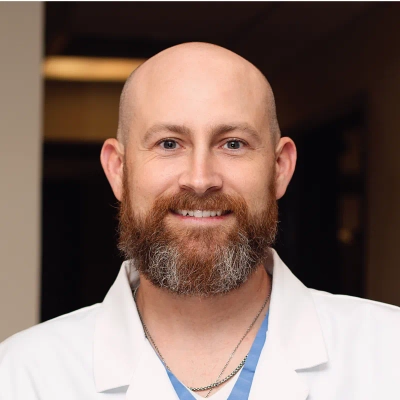 Dr. Jason Schroder, Medical Director & Co-Founder, Craft Body Scan
Explore Roles Through Projects and Networks
A Biology or Biological and Biomedical Sciences degree can lead to more careers than many people initially see. My own career has not been a straight or traditional line. I began in academic biomedical research, moved into regenerative medicine R&D, then regulatory affairs for drug-device products. Along the way, scientific writing, project leadership, mentoring, and translating complex data became just as important as my technical training. I now use those skills as an independent consultant in the biotechnology and animal welfare fields. Three main approaches guide me on my career path:
* Seek projects that build teamwork and communication skills as well as technical skills like experimental design, data analysis, scientific writing, good documentation practices. These projects may be research, internships, volunteer work, or campus jobs. Keep notes on your work, the tools you used, and what you learned. Notice what gives you energy as well as what you are good at. If it consistently drains you, consider which part of the work is the mismatch and whether a role centered on that work would suit you. If a project leaves you engaged and curious, explore that type of work further. Use these experiences as the foundation of your resume and as examples during interviews and conversations with others.
* Build relationships with professionals to help you understand if that area is a potential fit for you. Biology and Biomedical Sciences careers extend beyond R&D to clinical research, quality, manufacturing, regulatory affairs, public health, environmental science, education, and animal health (and even more). Most people are happy to share their experiences and help others see what is possible, so you do not need to wait for a job interview to start conversations. Analyze the data you collected from those discussions to explore paths that may fit you: look for patterns in what they enjoy, the skills they use, how they entered the field, and what they would do differently compared to your interests.
* Be open-minded about your role because it will always help you build transferable skills, relationships, and clearer evidence about what direction fits you next. Most successful people continue learning, evolving, and pursuing new opportunities throughout their careers.
 Breanne Gjurich-Wozniak, Scientific consultant, BioRipplet Endeavors LLC
Contribute to Published Research
Get involved in research as early as you can and, if there’s an opportunity, try to stay with a project long enough that you can contribute to a research paper. That gives you something very concrete to show for your experience. You can point to the study and explain what you did, and how your work contributed to the final result.
I did a doctoral degree in Microbiology and Molecular Biology myself, and a lot of what has shaped what I do now didn’t all come from the degree but from the years of working in the lab and co-authoring papers. You don’t have to be the first author, but the fact that you made a meaningful contribution counts for a lot. And it also deepens your own knowledge because you’re speaking to people in different specialties and getting exposed to problems that you simply don’t come across during the course itself.
 Mario Hupfeld, CTO and Co-Founder, NEMIS Technologies
Translate Technical Concepts Accurately
My top career advice is to get very good at translating complex biology into clear, accurate explanations. I routinely describe stem cells as “your body’s repair system” to help non-experts grasp the core idea. Practice explaining concepts both orally and in writing, and be upfront when the molecular details go beyond your current knowledge. That combination of clarity and intellectual humility will make you more effective across research teams, clinics, and industry roles.
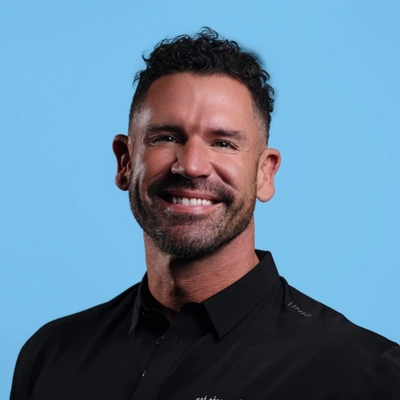 Seth Berge, Founder, CEO, Regenerative Revival
Add Digital Expertise to Your Degree
For biology and biological or biomedical sciences majors, the strongest career move is to pair scientific knowledge with one practical, technology-driven skill. Fields such as bioinformatics, clinical data analysis, biotechnology, pharmaceutical research, and health technology increasingly require professionals who can interpret biological information alongside digital and analytical data. The World Economic Forum’s Future of Jobs Report 2025 found that 39% of workers’ core skills are expected to change by 2030, with AI and big data, technological literacy, and analytical thinking among the fastest-growing capabilities. A biology graduate who develops competence in areas such as Python, statistics, data visualization, bioinformatics tools, or AI applications in life sciences can therefore broaden the range of roles available beyond traditional laboratory positions. The key is not abandoning the scientific foundation, but building a second layer of career-ready skills that connects biology with the technologies shaping modern healthcare and life sciences.
 Arvind Rongala, CEO, Invensis Learning
Learn How Science Reaches Customers
MY ADVICE: A biology degree combined with an understanding of what part of a business turns science into a product people want to purchase is a good route. In my space, bio majors can add immediate value in R&D, QA, Regulatory & Supply Chain. Think COA review, Stability Testing, Claim Substantiation. Those who move into Leadership need to have an understanding of the Manufacturing Floor, the FTC Structure-Function Rules and How Customers Read Labels.
The Gap. We took our First Probiotic Product to Market with a Clinical Label (Strain Names, CFU Counts, Mechanism Callouts) and it barely Moved. The Science Was Correct but the Translation Wasn’t. That isn’t taught in any Biology Program.
In Your First Job, a Vertically Integrated Small Brand will teach you more in two years than a Large Pharmaceutical Company Track will in Five Years. At a small brand you will be sitting next to Formulation, Production and Marketing all in one week. Large Companies Teach Depth. Small Teams that are Integrated Teach the Whole System Fast.
 Hans Graubard, COO & Cofounder, Happy V
Enter Biotech Operations Roles
Coming from the precision cleaning and passivation side of biotech manufacturing, I’ve worked closely with biology grads who thought they’d only end up in labs. My biggest advice: don’t overlook the operations and technical services side of the industry. Some of the sharpest minds I’ve seen in our field started with a biology degree but found their niche in quality control, validation, or process optimization for pharmaceutical and biotech manufacturing. These roles let you apply your scientific knowledge while solving real-world production challenges. The demand is huge, the pay is competitive, and you get to see your work directly impact patient outcomes. Plus, companies desperately need people who can speak both the language of science and the language of getting things done at scale.
 Kevin Peguero, Digital Marketing Manager, Astro Pak
Build a Shareable Patient-Data Portfolio
Even in October, peak recruiting season, having a biology degree will not set you apart when applying to these data positions because they also accept nonmedical degrees like computer science.
According to the Bureau of Labor Statistics (2026) Medical Registrars and Information Technologists are projected to grow 16% by 2035 because there will be a need to analyze the increase of patient data.
This is a small field (about 42,000 jobs), but the pay is good (2025 median pay is $68,020 compared to $50,980 for all jobs). To stand out, pick a data tool like SQL or Excel this month. Make it stick. Find some synthetic patient data and make a project you can share with an interviewer that can be viewed in seconds.
In my remote triage work, I can’t examine the patient. If an entry is incorrect, any doctor is led astray. Show them what you can do with your Biology knowledge to make usable records.
 Maria Knobel, Medical Director, Medical Cert UK
Gain Lab Experience Before Graduation
Get into a lab or a clinic before senior year, not after. I interview premed and biomedical science graduates every year who list coursework and GPA but can’t describe a single hypothesis they tested with their own hands. Find a research mentor who lets you own a small piece of a project, even something as narrow as tracking healing rates on a laser resurfacing study, and learn to explain the mechanism, not just the result. Biology majors who eventually land in a medical or biotech setting are the ones who spent undergrad asking why a treatment works at the cellular level, not just memorizing that it does. Shadow someone doing the actual clinical work in whatever field interests you, dermatology, pathology, biotech research, and ask to see a failed result, not just a successful one. Failed experiments and unexpected complications teach you more about a field than any textbook chapter, and interviewers can tell within five minutes whether a candidate has actually sat with uncertainty in a lab or clinic versus just studied it from a distance.
 Dr. Cameron Rokhsar MD FAAD FAACS, Founder & Medical Director, New York Cosmetic Skin & Laser Surgery Center
Verify Health Claims With Evidence
Apply to some jobs outside of lab work if you’re a biology major. Companies that advertise health-related products will need someone who can read a study and determine whether its claims are supported. I know a lot of marketing companies that can’t. When you’re seeing medical clinics advertise that their methods are clinically proven and have one study of 12 patients to support their statement, it’s definitely something to worry about, especially with the number of times you’ve seen your classmates oversell their studies during your college years.
Just put something on your resume that backs it up. Read 15 published articles and identify three with sample sizes too small to support strong conclusions. Tell the hiring manager in your interview. People go through an average of 40 resumes when hiring. In October, you know this as well as I do. You will stand out as that biology major who can verify whether their statements are supported. It’s a good thing to know that customers will believe what you’re selling and continue to use your services for many years.
 Cyrus Kennedy, Chairman & Acting CEO, The Ad Firm
Cultivate Your Professional Presence Gradually
As Head of Growth at Chronicle Technologies, my main advice is to practice career cushioning by building a low-friction professional presence while you are still in school. In my experience with B2B SaaS over the last several years, remote work reduced the time friction that used to make cushioning difficult. That change let people use small chunks of time to write publicly, take occasional advisory calls, or appear at virtual events. For biology students this can translate into writing about lab work or project findings, joining virtual seminars, and responding to occasional advising or outreach opportunities. You do not need large blocks of time; in one example a legal tech acquaintance spent about three hours a week on his online presence and side consulting. Two years later, after a company merger and reorganization, he had a pipeline of consulting clients and did not have to rush to find work. The key is consistency and low friction: small steps taken over time accumulate into real options. Set a modest, sustainable weekly goal and keep building so you have choices when circumstances change.
 Will Yang, Head of Growth, Chronicle Technologies
Use Science in Unexpected Industries
For students majoring in Biology or Biological and Biomedical Sciences, my biggest career advice is to look beyond the obvious job titles and pay attention to industries where your scientific knowledge solves practical problems. In metal finishing, for example, I’ve seen how chemistry, materials science, environmental compliance, and process control intersect every day, which means technical thinking can be valuable in places students may never encounter in a traditional biology career guide. Over the years, some of the strongest problem-solvers I’ve worked with have been people who could understand the science but were also willing to learn how a real production environment operates. I’d encourage students to use internships and early jobs to explore manufacturing, medical devices, biotechnology, environmental services, quality assurance, and other applied fields rather than narrowing their options too quickly. Your degree gives you scientific literacy; learning how to apply it to real-world problems is what can make you especially valuable to an employer.
 Talya Turgeman, Owner, Worldline Express
Bridge Evidence and Client Communication
Science thrives on curiosity but careers in biology and biomedical sciences demand more than technical expertise. My experience in professional skincare and medical aesthetics has taught me the power of bridging science with communication. Whether you’re exploring skin health, laser technology or ingredient science, being able to translate complex concepts into actionable insights is a skill that sets you apart. For example, educating clients on post-treatment skin barrier care isn’t just about knowing the science it’s about making it relatable and practical for everyday life.
A practical step is dedicate time in improving your ability to explain research findings or processes in simple terms. Use lab presentations or even social media as training grounds for honing this communication muscle. I’ve seen firsthand how this builds trust, whether it’s with a client after a laser treatment or with colleagues discussing safety protocols. Lastly, immerse yourself in evidence-based practice. Over the years, adhering to proven data, coupled with the ability to demystify it for others, has not only advanced my career but also enhanced the results I deliver. Start practicing now and you’ll stand out in any professional setting where biology meets real-world application.
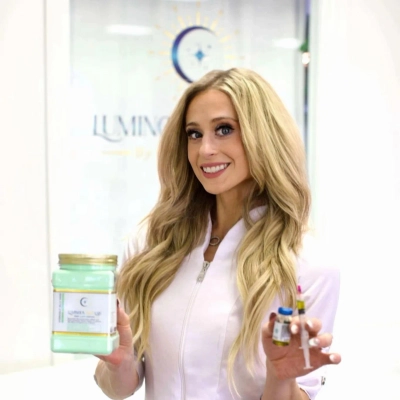 Katelyn Fitzgerald, Founder & CEO, Luminous Skin Lab
Target Global Life-Science Ventures
Having advised private equity and multinational companies on corporate growth and cross-border matters for over 20 years, I see immense value in applying scientific training to emerging commercial sectors. Don’t limit your recruiting search strictly to the lab bench when high-growth life science ventures urgently need analytical talent to drive international expansion.
At Corpiya, we help businesses scale globally by integrating AI-driven strategies and technology-enabled transformation. Biomedical graduates who can connect complex scientific research with automated governance and data-driven operations are uniquely positioned to thrive in these expanding organizations.
During this October hiring cycle, target roles within cross-border biotech startups, venture advisory groups, and health-tech enterprises. Position yourself as someone who can bridge technical life sciences with operational execution and modern technology.
 Sebastien Gaddini, Principal, Corpiya
Treat Each Job as an Audition
Truth be told, the path of a biology major is narrowed down to the point of a pin by October in one’s senior year. It’s a matter of pursuing a medical school of a PhD program or bust (and the pressure starts as early as freshman orientation). That kind of gravity is a lot to carry for someone who’s 21, and lots of good students become despondent when the first application cycle ends not in acceptance but in denial, seeing a year or two of work as wasted time, a misstep that doesn’t factor into their success. It’s just not the case, as a biology degree opens up many more doors than one would imagine, even outside the field of biology as a career.
To that end, think of any job in your field of study as an audition. A job as a lab technician or a biotech sales rep will introduce you not only to the inner workings of science but also, to the types of people who work there, the ones who are perpetually frayed at the edges at 4pm on a Wednesday, the roles that actually pay and those that only look nice in the brochure, not to mention the mentoring opportunities not found elsewhere. And I’d say 2 years of that kind of experience isn’t too much to ask for, as very rarely do people regret this decision. Just my two cents!
 Dr. Jonathan Wong D.D.S., M.S., Owner and Endodontist, Renovo Endodontic Studio
Complete an End-to-End Data Project
My biggest piece of career advice for students majoring in biology or biomedical sciences is to build at least one experience where you work with real data from start to finish.
These majors provide a strong scientific foundation, but many students graduate with similar coursework in biology, chemistry, genetics, microbiology, and laboratory methods. What can make someone stand out is being able to show that they have taken messy information, analyzed it carefully, and drawn a defensible conclusion.
I would look for opportunities to assist with faculty research, work in a laboratory, participate in a clinical or public health project, or complete an independent project where you have to collect, clean, organize, and interpret data. Even a smaller project can be valuable if you understand it deeply.
The important part is being able to explain what you actually did.
Instead of telling an employer, “I worked in a research lab,” I would be prepared to describe the question being studied, how the data was collected, which methods or software I used, what problems came up, and how I checked whether the results were reliable.
That kind of explanation shows much more than technical exposure. It demonstrates scientific judgment, attention to detail, comfort with uncertainty, and the ability to communicate evidence clearly.
I also think this advice matters because biology and biomedical sciences can lead in many directions. Some students will pursue medicine or graduate school, but others may move into biotechnology, pharmaceuticals, clinical research, laboratory operations, public health, regulatory work, or data-focused roles.
A real data project gives you something that transfers across many of those paths.
During recruiting season, I would not rely on the degree title alone to communicate your value. Employers may know you completed demanding science courses, but they still need evidence that you can apply that knowledge to a real problem.
My advice is to graduate with at least one project you can explain in detail, including the question, the method, the data, the conclusion, and what you would improve if you repeated it.
A biology degree shows that you studied science. A strong research or data example shows that you know how to think scientifically, and that is what makes the degree much more useful in an interview.
 Joe Benson, Cofounder, Eversite
Develop Depth Through Demanding Work
I started my insurance career in 1993 and was given real responsibility within two years as an underwriter. That early exposure to how risks are priced and placed showed me the advantage of learning an industry from the inside before striking out on my own.
Biology majors should treat the first few years after graduation the same way. Use that time to take on demanding work in a specialized area rather than chasing the most obvious roles.
We built lasting depth in construction and building certification by staying involved when many insurers pulled out entirely. Students who do the same in their field, going where direct or easy options do not exist, create the same kind of durable position.
The clearest pattern from my own path is that working harder than everyone around you while you are still young compounds faster than any later strategy.
 Tom Knox GAICD, CEO, Business Insurance Specialists Pty Ltd
Seek and Apply Feedback
As CEO of MentorCity, my advice to students majoring in Biology or Biological and Biomedical Sciences is to make seeking and acting on feedback a central habit in your career development. Employers value quick learners who adapt to new roles and build strong working relationships. Practice this habit by joining mentoring groups, participating in mock interviews, and having regular conversations with employers to solicit and apply feedback. Pair these activities with steady development of your technical skills and strong questioning so you can learn quickly on the job. Students who routinely seek feedback and use it to improve their performance position themselves for faster growth and clearer career direction.
 Shawn Mintz, CEO, MentorCity
Test Career Paths Early
My biggest advice to biology and biomedical science majors: don’t wait until senior year to figure out whether you actually like bench science. Get into a lab, clinic, biotech company, hospital, or research setting early enough to see what the day-to-day really feels like, because “I love biology” and “I want to do this eight hours a day” are two very different things. The degree can lead into research, biotech, healthcare, pharma, regulatory work, data, scientific communications, and a bunch of less obvious paths, so don’t lock yourself into med school by default. I’d also build one practical skill employers can grab onto—statistics, coding, clinical research, regulatory knowledge, or technical writing. Science knowledge is great, but science knowledge plus a usable skill is where things start getting interesting.
 Justin Belmont, Founder & CEO, Prose
Pursue Practical Experience Across Careers
My advice to biology and biomedical science majors is to seek opportunities for practical experience before graduation because employers seek practical experience. There are many career opportunities available to biology majors. Don’t expect or assume that your first job and other career opportunities will be limited to those related to biology. Possible careers related to horticulture include jobs and research positions using your knowledge of biology in areas such as plant pathology and breeding, soil science, pest control, conservation, and other environmental fields. Seek internship and volunteer opportunities related to biology, such as specimen care, to gain practical experience. Interviewers are likely to ask about your practical experience rather than your coursework. Be prepared to talk about what you have learned on the job. Strong communication and data analysis skills can benefit your career prospects. Your scientific knowledge will be more valuable if you can explain it to nonscientists.
 Tammy Sons, Founder/CEO, TN Nursery
Apply Knowledge to Field Problems
Do not assume a biology degree belongs only in a laboratory. In landscaping, plant health depends on reading soil, moisture, light, pests and seasonal stress as one living system. Build field experience that shows you can observe conditions, record evidence and turn biological knowledge into a practical recommendation. Employers remember graduates who can explain why something is failing and what should change next.
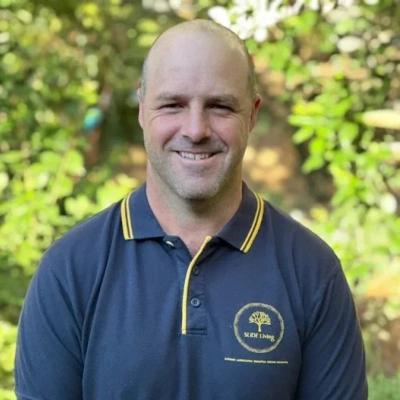 Gregory Hair, Owner, Landscaper, SLIDE Living
New Job Postings
Advanced Search
