Career Advice for Job Seekers
The AI-human hybrid: Skills every 2026 grad needs (that aren’t coding)


The job market is shifting fast, and coding alone won’t be enough to stand out when the class of 2026 enters the workforce. Industry experts agree that success will depend on a new set of human skills that artificial intelligence can’t replicate—abilities like judgment, resilience, and reading the room when it matters most. Here’s what tomorrow’s graduates need to build today to thrive in an AI-augmented workplace.
- Develop Razor-Sharp Discernment
- Frame Problems with Structure
- Treat Automation as an Intern
- Set Boundaries and Verify Actions
- Convey Priorities and Trade-Offs Clearly
- Challenge Outputs with Context
- Write Precise Prompts That Deliver
- Adopt Healthy Skepticism Toward Tools
- Break Work into Decisive Steps
- Connect Patterns to Ethical Choices
- Excel at Human–Machine Teamwork
- Listen for Intent Then Ask Follow-Ups
- Safeguard Fairness and Culture
- Probe Results and Communicate Rationale
- Exercise Sound Judgment Under Uncertainty
Develop Razor-Sharp Discernment
As we move deeper into the AI-human hybrid era, one of the most critical non-coding skills 2026 graduates should develop is discernment. In a world where AI can generate answers, plans, and even ideas in seconds, the advantage shifts from production to curation. Discernment is the ability to sift through vast amounts of data, nuance competing perspectives, and determine what truly matters—what’s accurate, ethical, relevant, or actionable in a given context. It’s not just critical thinking. It’s pattern recognition with judgment.
Graduates will enter workplaces where AI drafts reports, suggests strategies, flags anomalies, and offers predictions. But AI doesn’t know the real-time dynamics of office politics. It doesn’t know your client’s personality, or which metric matters most to the board this quarter, or what kind of tone will land with the marketing team. That gap between information and action is where discernment thrives. It’s the skill that turns AI from a crutch into a collaborator.
Consider Aneeka, a recent graduate working in HR at a global firm that integrated AI for resume screening, employee surveys, and engagement tracking. Instead of relying blindly on AI outputs, she began reviewing sentiment data in context—asking questions like, “Is this dip in engagement reflective of workload, or a temporary leadership shift?” Her ability to interpret what AI couldn’t see—nuance, mood, culture—made her insights more valuable than the dashboards alone. Within six months, she was leading process improvements that AI had missed entirely.
In fact, a 2025 McKinsey report emphasized this point: the most successful early-career professionals in AI-augmented workplaces weren’t the ones who coded the tools, but those who understood when not to trust them. Professionals with strong discernment skills were 46% more likely to be rated as top performers by their managers, especially in roles requiring cross-functional decision-making.
As automation accelerates, graduates won’t be hired for what they can automate—they’ll be hired for what they can discern. The question won’t be “Can I do this faster?” but “Should we do this at all?” Discernment becomes the new edge: the skill that filters noise, aligns ethics, and drives better, human-centered decisions in an increasingly intelligent world.

Frame Problems with Structure
To thrive in an AI-human hybrid workplace by 2026, graduates need to develop one crucial non-coding skill: structured problem framing.
With AI tools becoming readily available, the key advantage shifts from knowing how to use the tool to understanding what questions to ask, what context to supply, and how to evaluate the results. Graduates who can clearly define a problem, break it down into manageable constraints, and articulate their desired outcomes consistently outperform those who use AI without clear direction.
In hybrid workplaces, AI manages execution speed, pattern recognition, and initial draft outputs. Humans, however, remain responsible for setting the intent, prioritizing trade-offs, validating accuracy, and applying judgment. When problems are poorly framed, the AI can produce confident but incorrect answers, a common pitfall for many early-career professionals.
This is particularly evident when we work with global companies that hire early-career talent in India. Graduates who can explain the rationale behind a task, question assumptions, and translate vague objectives into precise inputs get up to speed more quickly and gain trust sooner than their peers who possess stronger technical abilities but less developed thinking structures.
In practice, problem framing is not a soft skill. It has a direct impact on productivity, the quality of decisions, and how effectively individuals collaborate with both AI systems and senior stakeholders. In 2026, the graduates who will stand out will be those who think most clearly, not necessarily those who code the most.

Treat Automation as an Intern
While today’s students run ahead by amassing tools and prompts, their unique advantage lies in how astutely they can judge and critique what those tools deliver. Of course, it is efficient to have A.I. do the work of writing reports, screening resumes and summarizing data sets in seconds, but only if it completes those tasks well. And even a 5 to 10 percent error rate can result in biased hiring practices, compliance problems or just plain mistakes that affect employees, the very people these systems are designed to help.
It’s one thing to have a system that ranks candidates or proposes feedback language, but another to understand context, culture fit or legal nuance. You need someone, somewhere to take a minute to look at the output and ensure it is fit for purpose.
The most successful graduates aren’t the students who use the software the fastest; they are those who use it most judiciously. While it may be useful to think of A.I. as an intern, it is certainly not a boss. This is where assumptions are tested, facts are checked and outputs are calibrated with human judgment. To do this, we must ensure that our capacity to access these technologies remains robust.

Set Boundaries and Verify Actions
One important non-coding skill 2026 graduates should develop to thrive in an AI-human hybrid workplace is judgement. AI will continue to refine outputs and replace repetitive workplace tasks, but what it cannot (yet) do is set ethical boundaries, recommend the most appropriate strategy, verify information with complete accuracy, consider the nuances of decisions, etc. Employees who can recognize bias, verify outputs, understand when human input is required, perfect their questioning skills, consider potential consequences, and look long-term at decisions will have an advantage.

Convey Priorities and Trade-Offs Clearly
Communication skills will be increasingly important to thrive in an AI-human hybrid workplace. Clear communication shows structured thinking, prioritization, and an understanding of trade-offs. Teams rely on strong communication when collaborating with both people and AI tools. In practice, this might look like summarizing an AI-generated analysis into a few decisive takeaways, or explaining how a recommendation aligns with business goals rather than simply sharing the data.

Challenge Outputs with Context
The #1 non-technical skill for graduates from 2026 is not simply having knowledge of AI and how to use it, but knowing when to challenge it – I have coined this term “Contextual Critical Thinking.” While the technical barriers of entry into the hybrid workplace are decreasing, the cost of making a poor decision continues to increase. An AI can create a working solution in seconds, but it does not understand the “why” of a business nor does it understand the maintenance debt it creates or will create in the long term.
Graduates who succeed going forward will be those that view the output of AI as a first draft and not a final answer. Continuing to further develop your decision-making ability will require you to understand if an AI-generated strategy adheres to the particular constraints of a project or product (budget, legacy architecture, user psychology, etc.). There is a noticeable shift from how a junior person generates output to how a junior person reads, audits, and refines their work.
Our internal observations are in agreement with the World Economic Forum, which concluded that Analytical Thinking remains the #1 most desirable skill of organizations today. Graduates from the class of 2026 will have an advantage over their competition in that they will be the “human-in-the-loop” that ensures that the efficiency provided by machines via AI doesn’t come at the cost of strategy or accuracy.
The speed of AI can be mesmerizing, but the individuals who will do well will be those individuals who stop to ask “Am I solving the correct problem?”
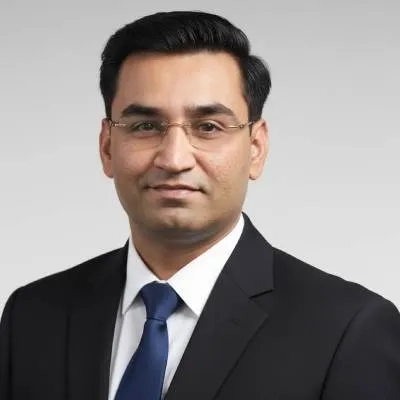
Write Precise Prompts That Deliver
The most important non-coding skill is learning how to write clear, specific prompts that get useful outputs from AI tools. Prompt engineering sounds technical but it is really about communication. Graduates who can articulate exactly what they need from an AI system and iterate on those requests will outperform peers who either avoid the tools or accept mediocre outputs.
This matters because AI is becoming a collaborator in almost every knowledge work role. The value shifts from doing routine tasks to directing AI effectively and evaluating its work. A graduate who treats AI as a junior team member they need to manage and guide will accomplish more than one who sees it as either a threat or a magic solution.

Adopt Healthy Skepticism Toward Tools
The number one nontechnical skill most needed is critical thinking. Being able to decipher when an AI prediction is safe, realistic, and helpful. Considering repercussions if things are wrong. Verifying results instead of blind acceptance. Knowing when not to use it. That healthy skepticism is a huge risk mitigator for companies, employees, and clients alike.
Here’s a common example of when this is helpful: An employee uses AI to research current statistics to support a company blog post. AI provides a list of stats with links to sources. If that employee doesn’t take a moment to stop and verify that the links actually go somewhere and the stat actually exists within them, then the company has now cited a completely made up statistic. It looks very bad. However, if your team knows to always verify, to pause and reflect on outputs, and to always be the final judge, then you’re in a much better place as a company.

Break Work into Decisive Steps
It’s structured thinking. Workplaces are getting AI heavy and people who stand out are the ones who can take a problem, break it down into clear steps, figure out trade-offs and decide what to hand off to AI and what actually needs human intervention.
With automation increasing at workplaces, structured thinkers become force multipliers by making faster decisions, cut noise for teams and turn tools to drive real performance.
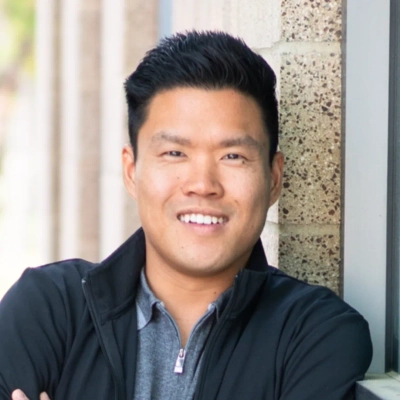
Connect Patterns to Ethical Choices
There is not one non-coding skill that will serve as a silver bullet for graduates to thrive in an AI-human hybrid workplace. There are interrelated and stackable skills that will allow humans to be in the driver’s seat as advanced technologies evolve at a rapid pace. Graduates will be faced with AI integrated into their daily work, as AI will be involved in both process (how something gets done) and product (the end result).
There are three essential skills that drive human behavior and decision making while working with advanced technologies. Pattern recognition is an undervalued skill that is essential in the age of generative AI. The ability to see trends and themes in data, behavior and situations as a thoughtful observer will make way for discernment and then, finally, ethical decision making. These 3 skills together will result in human-based decisions that promote ethics, productivity and quality.
In summary, 1) pattern recognition helps individuals detect underlying trends, 2) discernment allows humans to judge which patterns or info matter, which makes way for 3) ethical decision making so humans can choose morally responsible actions and next steps.
For example, a data analyst using AI on the job can 1) use AI-powered data dashboards to detect patterns in sales or customer behavior, evaluate which AI generated insights are reliable, and flag any biased or privacy-sensitive recommendations. Our graduates cannot just take AI outputs at face value, but instead need to develop the skills necessary to actively interpret patterns, judge what AI outputs are meaningful and decide on ethical courses of action. In some ways, I believe our graduates will need to know processes even better and become sharp observers so they know when AI is hallucinating or creating effective or biased responses.
I have been lucky enough to travel the world and observe individuals in entry and mid level roles across 5 job sectors and study the future of work deeply. All is not lost and there is a place for human skills with AI alongside us in the workplace!

Excel at Human–Machine Teamwork
Human-AI collaboration is the key non-coding skill, especially scoping tasks, checking outputs, and exercising judgment. In 2025 we saw employers struggle to hire for this, so they added hands-on task tests to screen real-world ability. Those who use technology to enhance, not replace, judgment stand out.

Listen for Intent Then Ask Follow-Ups
I have seen a huge shift in the way employers are vetting young talent. My data shows that technical skills get you the interview but active listening gets you the job. Most 2026 graduates have the wrong assumption that simply knowing the software will be enough to succeed, which causes a quick turnover. I watched hundreds of candidates who just started out fail to communicate because they could not hear what a manager wanted during a project briefing. AI takes care of the data but humans have to take care of the intent.
If you are a student going into this hybrid world, you should be aware that bosses pay for clarity. We see results when new hires no longer wait their turn to speak and ask follow-up questions instead. This ability is what links the gap between machine output and human goals. Graduates that can understand the “why” behind an AI-generated report will have an advantage over those who just hit “send” on the raw data.

Safeguard Fairness and Culture
Working in an AI-human hybrid workplace means that soft skills for workers will become more desirable than ever as a means of providing a high level of quality control to assist the output of artificial intelligence models.
Today, AI models are highly prone to inherent biases derived from their training data, and this means that modern graduates will need to be adaptable and perceptive enough to scrutinize the outputs of improper perspectives to uphold fair business practices.
Graduates may also be required to work with AI models in a way that helps to align generative output with the company culture and persona. This will mean reshaping reporting and insights in a way that creates consistency throughout the workplace.
Because AI excels when it comes to logic and pattern recognition but struggles to interpret the nuances and ethics of office dynamics, it’s essential that workers can add these ethics whenever they work alongside artificial intelligence models.

Probe Results and Communicate Rationale
A primary skill that will be required for 2026 graduates is critical thinking in combination with the ability to communicate clearly. Within the hybrid work environment that blends human and AI elements, humans will remain responsible for placing things into context, making judgements and explaining their reasoning, while AI will provide the answers. Graduates who can successfully ask probing questions of the results generated by AI, align them to business goals and clearly explain the rationale behind their chosen strategy will be able to build rapport amongst people and foster collaborative efforts between people and AI-driven workflows.

Exercise Sound Judgment Under Uncertainty
The most important non-coding skill 2026 graduates must develop to thrive in an AI-human hybrid workplace is critical thinking and judgment, the ability to evaluate information, make informed decisions, and guide AI outputs strategically.
AI is capable of producing insights, code, and content. What is right, moral, pertinent, and actionable must be determined by humans.
Why this skill matter?
– AI produces outputs that need to be assessed by humans. Instead of mindlessly relying on AI, graduates must assess relevance, identify bias, and confirm correctness.
– It is our responsibility to frame problems. AI can tackle predetermined issues, but humans must specify the appropriate queries, objectives, and limitations.
– Employers prioritise judgement above performance. Prioritisation, strategy, and decision-making are still done by humans, but routine jobs are automated.
– Effective AI collaboration is made possible by critical thinking. AI tools must be guided by humans, who must also verify suggestions and incorporate findings into practical business settings.
– Human responsibility for ethics persists. When applying AI in delicate fields like recruiting, banking, or healthcare, graduates must consider risks, fairness, and compliance.
Career impact:
1. Candidates that can articulate their thinking and make well-organised decisions are given preference by recruiters.
2. Critical thinkers can advance in their careers more quickly, take on leadership roles, and earn more money.
3. Product, consulting, strategy, analytics, and governance are examples of judgment-based roles that are more difficult to automate.
How students can develop this skill?
– Before utilising AI techniques, practice phrasing problems.
– Examine AI results and contrast various sources.
– Acquire knowledge about organised frameworks for making decisions (risk analysis, cost-benefit analysis, and first-principles reasoning).
– Develop subject expertise to give AI-generated insights context.
Coding and content production can be automated in an AI-driven workplace, but judgement, thinking, and accountability cannot. In the AI-human hybrid future, graduates with the ability to question, analyse, and make well-informed decisions will be crucial.

Related Articles
New Job Postings
Advanced Search
